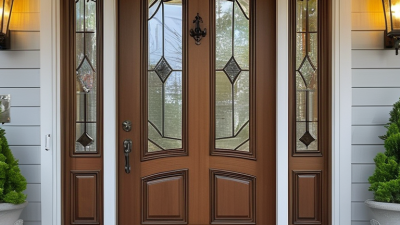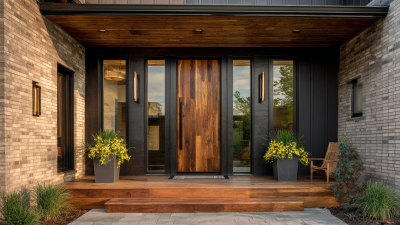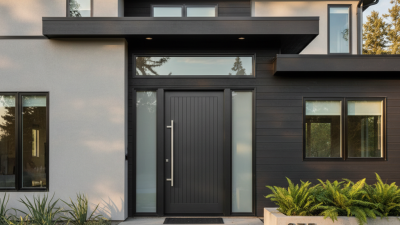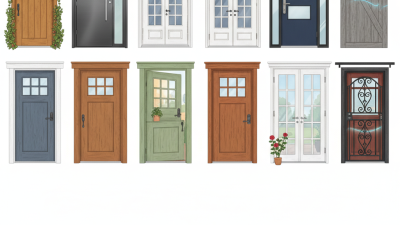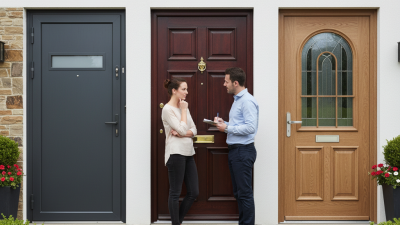


A front door does more than mark the way inside. It frames the first view of a home, faces daily weather, and handles constant use. Frank Lloyd Wright, the influential architect, wrote, “The space within becomes the reality of the building.” His observation speaks to the entry: a door can shape how a home feels before anyone crosses the threshold.
This guide explores 10 types of front entry doors, from classic wood panels to steel, fiberglass, glass, and modern designs. Each offers a different balance of appearance, upkeep, privacy, and insulation. A painted wood door may bring warmth to a shaded porch, while a glass insert can brighten a dim hallway. But more light can mean less privacy. Small details matter.
The best choice depends on the house and the people who use it. Consider the porch’s exposure, the size of the opening, and how much maintenance feels realistic. Check the door’s fit and weather seals, too; a beautiful style cannot fix a draft. No option is perfect. That is worth remembering. This overview compares the common choices and the trade-offs behind them, so you can narrow the field with practical questions—not just a photo of a door you liked.
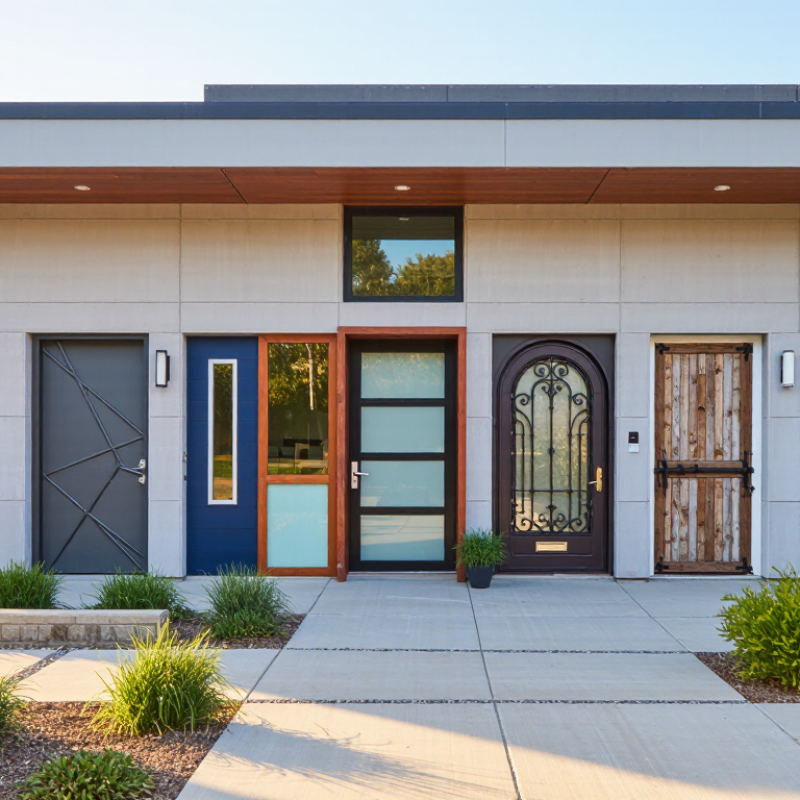
Front entry doors differ in both appearance and movement. A traditional hinged door swings inward or outward, while a pivot door turns on a floor-and-ceiling axis. Double doors create a broad opening, but need more clearance. Sliding and folding styles suit some contemporary layouts, though their tracks and hardware need regular attention.
Panel and flush doors change the visual character of the entry. Recessed panels add shadow and depth; a smooth flush face feels quieter and more modern. Glass inserts bring daylight to a dim hall, while sidelights brighten the doorway from either side. Small detail. Big effect. Glazing can reduce privacy, so textured or divided glass may be a better fit near a busy sidewalk.
Performance matters as much as style. The 2024 Cost vs. Value report by Journal of Light Construction estimated a national average cost of $2,355 for a steel entry-door replacement and a resale value of $4,430. These are modeled averages, not a quote or a promise of return. Check the door’s frame, seals, and swing direction on site; a beautiful wide door can feel impractical when it hits a narrow wall. I still think that is easy to overlook.
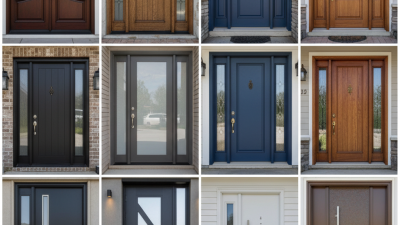
The top 10 types of front entry doors offer different balances of privacy, light, upkeep, and cost. Wood doors bring visible grain and a warm, substantial feel, but need protection from moisture. Steel doors are sturdy and often budget-conscious; dents can be difficult to disguise. Fiberglass doors can mimic wood grain while resisting weathering. Aluminum doors are lightweight, though their finish and insulation deserve close inspection. Glass-panel doors brighten a dark foyer, but privacy depends on the glazing.
A half-lite door has glass in its upper section, while a full-lite design admits more daylight and offers less visual privacy. Dutch doors split horizontally, letting the upper half open independently. Pivot doors rotate on offset hardware and need clear space to swing. Double-entry doors create a broad, formal opening, but require careful alignment. Solid-panel doors emphasize privacy and a simpler look. Some categories overlap; a fiberglass door can also be half-lite.
The Remodeling magazine 2024 Cost vs. Value Report estimated a national average cost of $2,355 for a steel entry-door replacement and a resale value of $4,430, or 188.1% of cost. That figure is an estimate, not a guaranteed return, and local labor and project details vary. Check the door’s weather seals, frame condition, and glazing performance before choosing. A handsome slab alone won’t fix a drafty entrance.
Front entry doors differ in more than appearance. Their core, frame, and surface affect insulation, durability, and upkeep. Solid-wood doors offer natural grain and can be repaired, but humidity may cause swelling or sticking. Engineered wood often combines wood layers around a stable core, reducing movement while keeping a wood-like surface. Steel doors commonly pair metal skins with an insulated foam core. They resist everyday impacts, though scratches can expose metal to rust. Fiberglass doors use molded skins over an insulating core and can imitate wood grain. Details matter.
Construction also shapes how a door feels and performs. Stile-and-rail doors use vertical and horizontal members around panels, creating visible joints and classic depth. Flush doors have smooth faces, often made from skins bonded to a solid or engineered core. Glass panels bring daylight into an entryway; insulated glazing can help reduce heat transfer. Composite doors combine materials, but their quality depends on how well the layers are joined and sealed. A heavy door is not automatically a better door. Check the frame, weatherstripping, and threshold, too. Even a well-made slab may leak air if installed out of square. I tend to focus on the surface first, then remember that the unseen core and careful fitting matter just as much.
Top 10 Types of Front Entry Doors: How to Compare Security, Insulation, and Maintenance
A door’s security depends on more than its material. Check the frame, strike plate, hinges, and lock as one system; a strong slab can still sit in a weak frame. The FBI’s 2019 Uniform Crime Report found that 62.8% of burglaries involved residential properties, though it did not identify the entry point. That distinction matters. A reinforced frame and properly fitted deadbolt are practical features to compare across steel, wood, fiberglass, and composite doors.
For insulation, compare the whole-door U-factor on an NFRC label: lower values indicate less heat transfer. Then inspect the weatherstripping and threshold; even a narrow daylight gap can invite drafts. Small details matter. Maintenance varies: wood may need periodic refinishing, while steel can rust where its coating is chipped. Fiberglass usually resists moisture, but finishes and seals still need inspection. JLC’s 2024 Cost vs. Value report estimated a 188.1% cost recoup for a steel entry-door replacement, a resale estimate rather than a durability guarantee. Local labor, climate, and upkeep can change the real value. I would not choose by material alone; compare the tested performance, installation quality, and the maintenance you will actually do.
Ratings are a qualitative comparison of typical door materials and constructions, from 1 (lower) to 5 (higher). They are not standardized test results; actual performance depends on the specific door, glazing, hardware, installation, and climate.
A front entry door should suit the home’s weather, security needs, and daily use—not just its style. Steel doors resist impact and need little maintenance, while fiberglass can mimic wood grain without the same sensitivity to moisture. Solid wood offers warmth and can be refinished, but exposed edges need regular care. Check the frame, threshold, hinges, and locking hardware as carefully as the door slab. A beautiful door can still leak air if the frame is poorly fitted. Measure the opening before choosing a replacement, especially in older homes where the jamb may be out of square.
Energy performance matters. The U.S. Department of Energy’s Energy Saver guidance recommends weatherstripping around movable doors and sealing gaps at fixed frames to reduce drafts. Look for a tight perimeter seal and a threshold that closes without scraping. For a financial reference, Zonda’s 2024 Cost vs. Value report estimated a 188.1% cost recoup for a steel entry-door replacement in its national model. That is an estimate, not a promise; local prices and resale conditions vary. Don’t choose by resale figures alone. Consider whether a glazed panel brings useful daylight or unwanted heat, and whether privacy glass suits the entry. Tiny details count. Check the swing direction and clearance for a mat, too. I have seen that detail overlooked.
| Door Type | Typical Construction | Potential Advantages | Factors to Consider | May Suit Homes That Need |
|---|---|---|---|---|
| 1. Solid Wood | Made from wood boards or engineered wood components; available in many species and designs. | Natural appearance, can be stained or painted, and can often be repaired or refinished. | Needs periodic finish maintenance. Wood can swell or shrink with changes in moisture and temperature; insulation depends on the door’s construction. | A traditional or custom appearance and a willingness to maintain the finish. |
| 2. Steel | Usually a steel skin over an insulated core, commonly with a wood or composite frame. | Often offers good strength and insulation for its cost; the smooth surface can be painted. | Dents may be difficult to repair, and damaged coatings can allow steel to rust. Check the complete door-and-frame system, not just the skin. | A practical, insulated option with a painted finish and routine upkeep. |
| 3. Fiberglass | Molded fiberglass skins over an insulated core; some designs imitate wood grain. | Resists moisture-related swelling and is generally low maintenance; available in painted and wood-look finishes. | Quality and insulation vary by model. Severe impact can damage the skin, and some finishes require specific care. | Low-maintenance performance or a wood-like look in exposed locations. |
| 4. Aluminum | Aluminum frame and panels, sometimes combined with insulated sections or glazing. | Lightweight and resistant to rust; can provide a clean, modern appearance. | Thermal performance depends on design. Look for an appropriate thermal break in climates where heat transfer is a concern. | A contemporary design, particularly when paired with suitable thermal construction. |
| 5. Glass-Panel | A door with one or more glazed sections, in a range of sizes and layouts. | Brings daylight into the entry and can connect visually with outdoor spaces. | Privacy, security, and energy performance depend on glass type, glazing, frame, and placement. Safety glazing may be required in certain locations by local code. | More natural light, with glazing selected to balance privacy and performance. |
| 6. Flush | A smooth, flat-faced slab, available in different materials and finishes. | Simple lines suit modern and minimalist architecture; a plain surface is easy to coordinate with other finishes. | Performance depends on the core, material, frame, and weather seals—not on the flat appearance alone. | A streamlined look and a simple, uncluttered entry design. |
| 7. Paneled | A door with raised or recessed panel detailing, made from wood, steel, fiberglass, or other materials. | Offers a classic appearance and a wide range of panel patterns and finishes. | Panel design is primarily a style choice; insulation and durability depend on the door’s material and construction. | A traditional or transitional façade with decorative detail. |
| 8. Dutch | A single door divided horizontally so the upper and lower sections can open separately. | Allows airflow or a view through the upper section while the lower section remains closed. | The split adds hardware and sealing points. Check latching, weather resistance, and security for the intended use. | A distinctive entry where controlled airflow or interaction through the upper half is useful. |
| 9. Double | Two door leaves meet in the center; one leaf may remain secured when not in use. | Creates a broad opening for moving large items and can make an entry feel more formal. | Requires adequate wall and porch clearance. The meeting point, hardware, and weather seals need careful fitting. | A wide entrance or a home where a larger opening is often useful. |
| 10. Pivot | A door rotates on pivot hardware mounted at the top and bottom rather than on conventional side hinges. | Supports a striking, contemporary design and can accommodate large door panels when properly engineered. | Requires compatible hardware, careful installation, and sufficient swing clearance. Weather sealing and accessibility should be checked for the specific design. | A modern architectural entry with room for a distinctive door and its swing path. |
Selection note: These categories can overlap: for example, a paneled door may be made of fiberglass, and a glass-panel door may use a steel or wood frame. Compare the full door system, including frame, weatherstripping, glazing, threshold, hardware, and installation. Local building and safety requirements may also affect the choice.
Get the latest news straight from us on all our new products, features, services, and much more!