

What Are the Best Front Doors With Glass from China?

Choosing the best front doors with glass from China requires more than comparing catalog photos. A beautiful entrance may hide weak seals, thin frames, or unreliable hardware. Buyers should examine construction details, supplier experience, and verified performance before placing an order.

Experienced importers usually request full specifications first. These may include aluminum or steel frame thickness, glass type, thermal-break design, hinge capacity, lock system, and surface finish. Laminated or tempered glass can improve safety, while low-emissivity glazing may support indoor comfort. However, the right choice depends on climate, building design, and installation conditions. A door that performs well in a mild region may struggle in strong wind or heavy rain.

Factory verification adds practical confidence. Ask for production photos, test records, material samples, and references from comparable projects. Inspect corner joints, drainage channels, gasket compression, and powder-coating consistency. Small defects matter. A poorly aligned threshold can allow water beneath the frame. A sample door may also differ from mass production, so written quality requirements are essential.

No supplier is perfect. Even experienced manufacturers can miss details. That is why clear drawings, pre-shipment inspections, and agreed packaging standards remain valuable. Cracked glass, scratched finishes, or bent frames often result from careless handling rather than poor design. This guide compares Chinese suppliers and door styles through a practical lens. It focuses on durability, appearance, customization, cost control, and dependable communication. The goal is not to promote the cheapest option, but to identify doors that remain attractive and functional after years of daily use.

What Are the Best Front Doors With Glass from China?

Define Chinese Glass Door Types by Frame, Glass, and Opening Configuration

What Are the Best Front Doors With Glass from China?

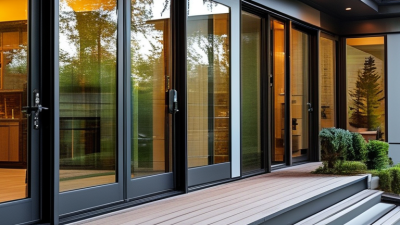
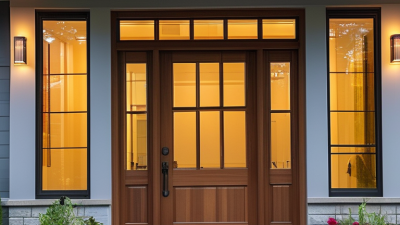
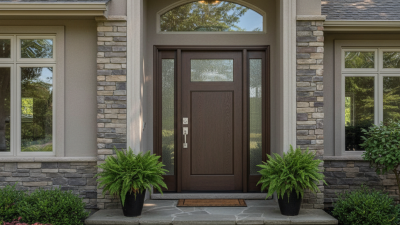
Chinese glass entry doors are best defined by their frame, glazing, and opening configuration. Aluminum frames offer low maintenance and slim sightlines. Thermal-break aluminum performs better in cold or hot climates. Steel frames provide strength, but exposed edges need careful corrosion protection. Wood and composite frames create warmth, although moisture control becomes more important. I have found that frame corners, drainage paths, and gasket compression often reveal more than catalogue images.

Glass selection should match climate, security needs, and daylight goals. Double glazing with low-E coating suits many residential projects. Triple glazing may improve insulation in colder regions, but it adds weight and cost. Tempered glass resists thermal shock, while laminated glass holds together after breakage. Obscured or frosted glass protects privacy near entrances. The International Energy Agency reported that buildings used about 30% of global final energy in 2022. Poor glazing can quietly increase heating and cooling demand.

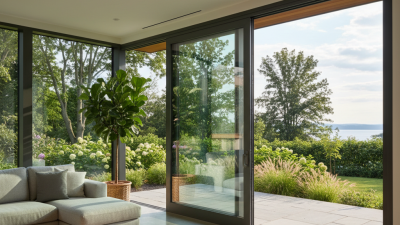
Opening configuration changes daily performance. Hinged doors usually seal better when installed correctly. Sliding doors save space, but their tracks need cleaning and accurate adjustment. Pivot doors create a dramatic entrance, though their hardware requires precise engineering. Folding systems open widely, but they include more seals and moving parts. The best Chinese supplier should provide U-value, SHGC, air-leakage, water-penetration, and wind-load data. NFRC testing principles offer useful comparison points. Still, paper values are not enough. Request corner samples, hardware tests, and installation drawings before ordering. A low price can hide weak thresholds.
Compare U-Factor, SHGC, and VT Ratings Using NFRC 100 and NFRC 200

When choosing front doors with glass from China, start with verified NFRC ratings, not appearance alone. NFRC 100 evaluates U-factor, which measures heat transfer through the complete door assembly. A lower U-factor usually means better insulation. This matters near a cold entry hall, where winter drafts can quickly affect comfort.

NFRC 200 evaluates Solar Heat Gain Coefficient and Visible Transmittance. SHGC shows how much solar heat enters through the glass. A lower value may suit hot, sunny climates, while a higher value can help passive heating in colder regions.

VT measures visible daylight. Higher VT can brighten a dark foyer, but excessive glass may reduce privacy and increase glare. Check the complete tested assembly, including the frame, glass, seals, and hardware.

Center-of-glass data can look impressive, yet it may not represent the installed door. Weatherstripping and threshold adjustment deserve attention. Small details matter.

Tips: Ask for current NFRC-based test documentation and confirm the product configuration matches your order. Compare U-factor, SHGC, and VT together. A door with excellent glass may still perform poorly if the frame leaks air or installation leaves gaps. Weatherstripping and threshold adjustment deserve attention. Small details matter. I would also question unusually perfect claims without test conditions, climate assumptions, or size references. Ratings guide decisions, but they do not replace careful site measurement and qualified installation.

Verify Tempered or Laminated Safety Glass Under ANSI Z97.1 and CPSC 16 CFR 1201

When choosing front doors with glass from China, safety evidence matters more than a polished product photo. Ask for test reports covering the exact glass size, thickness, and assembly. Tempered glass should meet ANSI Z97.1 impact requirements, while laminated glass should demonstrate retained fragments after breakage. Under 16 CFR 1201, architectural glazing uses Category I and Category II impact levels: 150 and 400 foot-pounds. The correct category can depend on pane size and location.

CPSC rules also require permanent certification markings or accompanying documentation. Check for the manufacturer, testing date, standard edition, glass type, and traceable report number. A generic “safety glass” statement is not enough. The National Safety Council’s Injury Facts reports that falls remain a major source of preventable injuries, making low-level door glazing and entry thresholds worth careful review. Glass near handles deserves extra attention.

In practice, request close photographs of etched markings, edge construction, and laminated interlayers. Confirm whether the report covers the complete door system, not only loose glass samples. That distinction is easy to miss. I would also compare hinge movement, frame rigidity, and shipping protection, because compliant glass can still arrive damaged. Test reports may look authoritative, yet an outdated report or mismatched pane can create false confidence. Review the documents with a qualified inspector before installation.

What Are the Best Front Doors With Glass from China? - Verify Tempered or Laminated Safety Glass Under ANSI Z97.1 and CPSC 16 CFR 1201

Glass Configuration Typical Front-Door Construction Safety Behavior Recommended Use Standards and Verification Key Questions for the Supplier
Double-pane tempered insulating glass unit Two panes of heat-treated safety glass separated by a sealed air or gas-filled cavity; often used with low-emissivity coatings. Tempered glass is stronger than ordinary annealed glass and breaks into relatively small particles when properly fractured. It does not normally remain in the frame after breakage. Best general choice
Suitable for glazed entry doors where impact resistance, daylight, and thermal performance are required.
Request permanent or traceable markings showing compliance with ANSI Z97.1 and CPSC 16 CFR 1201. Verify that both panes are safety glazing and that the complete door assembly is tested where required. Are both panes tempered? What are the glass thicknesses, cavity width, coating position, and test-report references? Is the unit tested for door use rather than only window use?
Laminated safety glass Two or more glass plies bonded with a plastic interlayer, commonly PVB or ionoplast; may be used as a single pane or within an insulating glass unit. When fractured, the interlayer is designed to hold most glass fragments together and can provide improved resistance to forced entry, windborne debris, and accidental impact. Best for retention and security
Useful for sidelights, large lites, homes near busy streets, and locations where post-breakage retention is important.
Confirm the finished laminated assembly is safety glazing certified to ANSI Z97.1 and CPSC 16 CFR 1201. The interlayer type, thickness, and exposure rating should match the intended climate and application. What is the interlayer material and thickness? Is the glass marked as laminated safety glazing? Has the assembly been evaluated for moisture, ultraviolet exposure, and door deflection?
Tempered outer pane plus laminated inner pane Insulating glass unit combining a heat-treated exterior pane with a laminated interior pane. Provides a balance of thermal insulation, exterior impact resistance, and interior fragment retention if the inner pane breaks. Strong premium option
Appropriate for exposed entrances, larger glass areas, and projects seeking additional security without using laminated glass on both sides.
Each pane must be identified correctly. Do not accept a report covering only the tempered pane; request documentation for the complete safety-glazing configuration and door system. Which pane is laminated? Is the laminated pane on the protected interior side? Are the spacer, seal, frame, and glazing stops compatible with the unit weight?
Laminated insulating glass unit Two or more glass plies with at least one laminated lite, combined with a sealed insulating cavity; configurations may include low-emissivity coatings. Offers fragment retention from the laminated lite together with improved thermal performance. The exact safety behavior depends on the number, thickness, and position of the laminated plies. Best for high-performance entrances
Suitable for large glazed doors, enhanced sound control, and projects requiring both energy efficiency and retained glazing.
Verify ANSI Z97.1 and CPSC 16 CFR 1201 documentation for the actual glass make-up. Confirm that the product is approved for vertical door glazing and the specified frame system. Does the certification identify the exact glass build-up? What are the visible light, solar-control, acoustic, and thermal values? Is the unit compatible with the door hardware and frame rebate?
Decorative or patterned tempered safety glass Heat-treated glass with a textured, obscuring, or patterned surface; may be supplied as a single pane or incorporated into an insulating unit. Retains the breakage characteristics of tempered glass, provided the complete pane has been correctly heat-treated after processing. Privacy and style focused
Suitable for entry doors where privacy and decorative appearance are priorities.
Any cutting, drilling, edging, sandblasting, or surface alteration after tempering can affect compliance. Require documentation for the finished pane, not only for the base glass. Was all fabrication completed before tempering? Is the pattern consistent across the full pane? Does the marking remain visible after installation?
Heat-strengthened glass Thermally processed glass with greater strength than annealed glass but different fracture behavior from fully tempered glass. Heat-strengthened glass generally breaks into larger pieces than tempered glass and should not be treated as an automatic substitute for safety glazing. Use only when specifically approved
May be considered for limited design or thermal-stress requirements, but it is not the default choice for hazardous door glazing.
Use only when the actual product has passed the required safety-glazing tests and local building requirements permit it. A claim of “heat-treated” alone does not prove ANSI Z97.1 or CPSC compliance. Is the glass fully tempered or only heat-strengthened? Which exact test report demonstrates compliance for the intended door location?
Verification note: ANSI Z97.1 and CPSC 16 CFR 1201 are performance standards, not simply descriptions of a glass type. Ask for the exact glass construction, visible safety-glazing marking, test-report number, test date, and product traceability. Confirm whether the certification applies to the glass only or to the complete front-door assembly.
Important specification checks: Verify local building-code requirements for hazardous locations, door height, sidelights, glass area, wind load, thermal performance, fire-rating limitations, and installation method before approving a purchase.

Check Air, Water, and Wind Performance Against ASTM E283 and GB/T 7106

What Are the Best Front Doors With Glass from China?

A reliable glass front door needs more than attractive frames and clear panels. Air leakage should be checked under ASTM E283, which measures airflow through door assemblies at controlled pressure differences. Ask for the tested pressure, specimen size, leakage rate, and laboratory conditions. A low number is useful only when the test setup matches your project.

GB/T 7106 evaluates air permeability, water tightness, and resistance to wind pressure for building doors and windows. These results can reveal how seals, corners, drainage paths, and glass edges behave under pressure. During inspection, look for compression marks around the gasket and clean water channels below the glass. Small gaps often become obvious after installation.

Do not treat the standards as identical. ASTM E283 focuses on air leakage, while GB/T 7106 uses a broader performance framework. Water testing may require additional American methods, such as ASTM E331, and structural wind testing may require ASTM E330. A qualified laboratory should confirm the correct method and report every test condition. In practice, this step is sometimes rushed. That is a weakness worth questioning. Review the complete report, not a cropped certificate or a single impressive figure. Door size, hardware adjustment, glass weight, and installation quality can change the result significantly.

Select the Best Door by Climate, Security, Energy Data, and Certification Records

Choosing the best glass front door from China starts with your local climate. In a cold region, request the whole-door U-value, not only the glass rating. A low number means better insulation. In hot climates, check solar heat gain and visible-light data. Large glass panels can turn an entryway into a small greenhouse. Coastal homes need corrosion-resistant hardware and careful drainage. Ask for test reports matching the finished door size.

Security requires more than thick glass. Laminated glass can remain bonded after impact, while tempered glass breaks into smaller pieces. Look for reinforced frames, multi-point locks, protected cylinders, and hinge bolts. The locking points should be tested as a complete door system. A strong lock on a weak frame is misleading. Request forced-entry results from an independent laboratory, where available. Photos are useful, but they are not evidence.

Energy and certification records deserve close inspection. Request air-leakage, water-penetration, wind-load, thermal, and acoustic results. Confirm the laboratory, test date, sample dimensions, and applicable standard. Certification marks should match your destination market and the exact product configuration. Glass thickness, spacer type, threshold design, and finish can change performance. I have seen attractive doors fail because the threshold allowed water inside. This is easy to miss. Ask for installation drawings, warranty terms, inspection samples, and corrective procedures before payment. A spreadsheet helps, but it cannot replace a physical inspection.