What Is the Best Membrane Structure Tent in 2026?

Choosing the best Membrane Structure Tent in 2026 requires more than comparing attractive photographs or low starting prices. A successful structure must balance weather resistance, architectural appeal, safety, comfort, and long-term maintenance. The right choice depends on its location, intended use, expected occupancy, and local climate.

A coastal event tent faces salt air, strong winds, and intense sunlight. A sports facility may need wide column-free space, controlled acoustics, and reliable drainage during heavy rain. In practice, the membrane fabric, steel or aluminum framework, cable tension, foundation design, and installation quality work as one system. Even a premium fabric can perform poorly when water collects near seams or when tension is uneven.

This guide examines the practical qualities that separate dependable membrane structures from temporary-looking alternatives. It considers UV stability, fire performance, waterproofing, wind and snow resistance, cleaning access, repair options, and expected service life. Manufacturer test reports matter, but independent engineering review and documented project experience provide stronger confidence. Local building requirements should also be checked before any purchase or installation decision.

There is no universal winner. That is worth remembering. A design that suits a wedding venue may fail in a snowy mountain region. Some product claims may sound impressive, yet maintenance costs remain unclear after several years. We will examine those gaps honestly, using realistic selection criteria rather than marketing language. By the end, readers can compare Membrane Structure Tent options with clearer expectations and make a decision based on performance, evidence, and actual project needs.

What Is the Best Membrane Structure Tent in 2026?

What Is a Membrane Structure Tent?

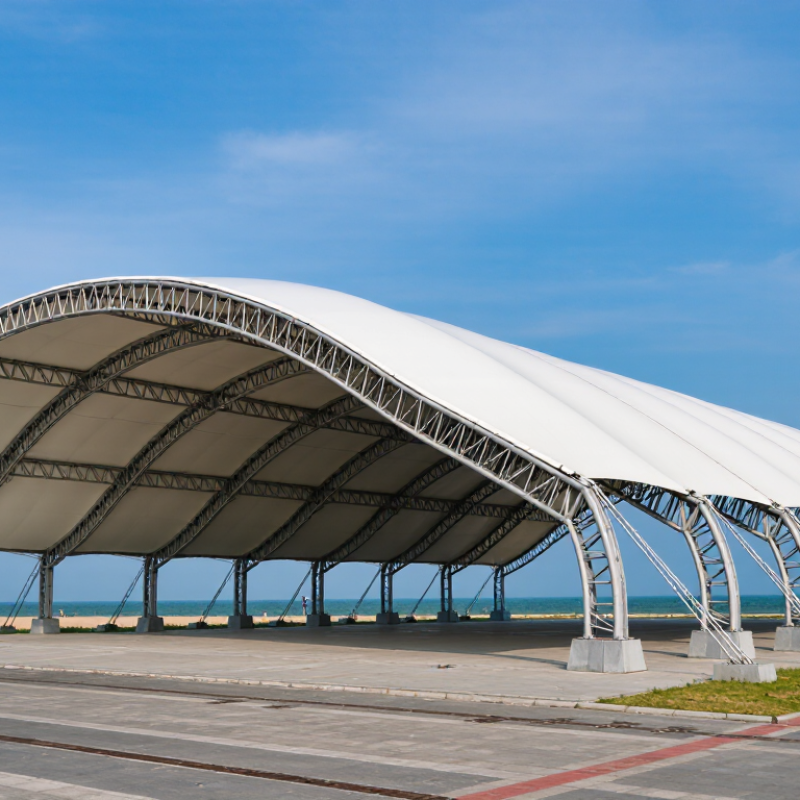
A membrane structure tent is a lightweight building made from a flexible fabric roof and a supporting frame. Unlike a conventional tent, it often uses tension to create stability. Steel masts, cables, arches, or edge beams pull the membrane into shape. The result can cover large areas without many interior columns.

The membrane usually consists of coated polyester or high-performance architectural fabric. Some materials allow daylight to pass through while reducing glare and heat. Others provide stronger insulation for colder conditions. Engineers study wind pressure, snow loads, drainage, fire performance, and local building requirements before approving a design.

Small details matter. A loose edge can collect water, while poor tension may create noisy movement during storms.

From practical experience, the best design depends on its location and purpose. A temporary event shelter needs quick installation and easy maintenance. A sports facility requires stronger protection, reliable ventilation, and long-term durability. Cleaning schedules, fabric inspections, and cable checks should be planned before construction. The structure may look simple, but its performance depends on precise engineering and careful installation. Not every translucent roof stays comfortable in strong summer sun. That is an important limitation. Weather data, user capacity, and maintenance access should guide the final choice, rather than appearance alone.

How Membrane Structure Tents Are Designed and Built

What Is the Best Membrane Structure Tent in 2026?

A high-performing membrane tent begins with its site, not its fabric. Designers study wind exposure, snow loads, soil capacity, drainage, and emergency access. A clear load path then connects the membrane, cables, masts, anchors, and foundations. Experienced teams use digital form-finding before fabrication. This process reduces wrinkles and prevents uneven tension.

Material selection requires evidence. PTFE-coated glass fiber offers strong durability and heat resistance, while PVC-coated polyester usually provides easier fabrication and lower initial cost. ETFE cushions can deliver excellent daylight, but they need careful pressure control and maintenance planning. The United Nations Environment Programme reported that buildings used about 32% of global energy in 2022. Therefore, designers should measure daylight, ventilation, and operating energy, not only purchase price. My practical concern is simple: a beautiful tent can still perform poorly if its entrances leak air.

Tips: Request stamped calculations, fabric test certificates, fire-performance documentation, and a documented inspection schedule. Ask how seams are tested. Ask how water leaves the roof. Small details matter.

Construction quality decides whether the design survives real weather. Crews should verify anchor positions, membrane orientation, bolt torque, and pretension levels. Independent inspection adds reliability. The International Building Code and local structural standards should guide final verification. The best structure is not always the largest or brightest. It is the one whose design assumptions remain credible after installation. That judgment still needs humility.

What Is the Best Membrane Structure Tent in 2026? — How Membrane Structure Tents Are Designed and Built
Design and Build Dimension Common Options or Typical Range Key Technical Data Design and Construction Implication Best-Suited Use
Structural Concept Pre-engineered frame tent, cable-net membrane, or mast-and-cable structure Load-bearing systems typically combine steel or aluminum members with pretensioned fabric panels and edge cables. The structural concept determines the required foundations, erection sequence, internal column arrangement, and achievable clear span. Choose a cable-supported system when a large column-free space is the priority.
Typical Clear Span Approximately 8–30 m for common temporary or semi-permanent structures Large engineered tensile roofs can exceed this range, but span capacity depends on geometry, pretension, wind, snow, and support conditions. Greater spans generally require stronger edge beams, higher pretension, deeper structural geometry, or additional masts and cables. Exhibitions, sports areas, event venues, dining spaces, and covered walkways.
Primary Membrane Material PVC-coated polyester, PTFE-coated fiberglass, or ETFE film PVC-coated polyester is commonly used for economical and transportable structures; PTFE-coated fiberglass offers long-term durability; ETFE is a lightweight transparent film system. Material selection affects translucency, weldability, fire behavior, cleaning requirements, expected service life, and project cost. PTFE-coated fiberglass is often the strongest long-life choice for permanent structures; PVC-coated polyester is practical for relocatable tents.
Fabric Weight About 650–1,500 g/m² for coated architectural fabrics Heavier fabrics generally provide increased tear resistance and durability, but they also increase handling, detailing, and supporting-structure requirements. The selected weight must match span, pretension, environmental loads, seam design, and installation equipment. Medium- to large-scale structures exposed to repeated weather or frequent use.
Surface Form Hypar, cone, ridge-and-valley, arch-supported, or pneumatic form Anticlastic forms, such as hypar geometries, curve in opposite directions and help stabilize the membrane through pretension. Form-finding software is used to establish a stable geometry before structural analysis and patterning. Hypar and ridge-and-valley forms are effective where drainage, visual quality, and stiffness must be balanced.
Membrane Pretension Typically specified by the structural engineer in both principal fabric directions Pretension is commonly expressed in force per unit width and is often in the low single-digit kN/m range for architectural fabric systems, subject to the fabric and design code. Insufficient pretension can cause flapping and ponding; excessive pretension can overstress seams, fittings, or supporting members. All tensile membrane structures, especially roofs with low curvature.
Roof Drainage High points, valleys, gutters, scuppers, and concealed or external downpipes Drainage geometry must prevent water ponding under the design rainfall condition and account for membrane deflection. Water flow paths should be resolved during form-finding rather than added after fabrication. Essential for regions with heavy rainfall, monsoon conditions, or frequent storms.
Wind Design Project-specific calculation using local wind speed, exposure, terrain, height, and importance category Wind uplift and pressure can govern edge detailing, anchor forces, cable sizes, and foundation design. Perimeter reinforcement and robust anchorage are especially important because membrane edges can experience high local suction. Structures in coastal, open, elevated, or cyclone-prone locations require site-specific wind engineering.
Snow and Rain Load Determined by local climate and applicable building code Snow accumulation and ponding risk are strongly influenced by roof curvature, valley layout, insulation, heating, and drainage. Cold-climate designs may need steeper geometry, snow-shedding details, higher pretension, or increased supporting capacity. Permanent or seasonal structures in temperate, alpine, or high-latitude regions.
Fire Performance Depends on membrane coating, substrate, assembly, and the governing code classification Architectural fabrics are available in flame-retardant grades, but the complete roof assembly must be tested or assessed as required by local regulations. Fire documentation should be confirmed before specification because fabric performance varies by product construction and test method. Public venues, hospitality areas, temporary event spaces, and enclosed structures.
Natural Daylight Translucency commonly ranges from low-translucency opaque fabric to highly translucent film systems Translucent membranes can reduce daytime electric-light demand while controlling glare through color, coating, geometry, and shading. Daylight modeling should consider solar heat gain, internal temperature, glare, and nighttime lighting appearance. Translucent roofs are effective for atriums, markets, sports facilities, and event halls.
Thermal Performance Single-layer membranes provide limited insulation; cushion or multilayer systems provide improved thermal control Thermal performance is governed by membrane layers, air gaps, surface properties, ventilation, and the use of mechanical conditioning. For conditioned buildings, membrane roofs often need additional insulation, an inner liner, or a separate enclosed envelope. Seasonal venues, covered outdoor spaces, and projects where passive ventilation is acceptable.
Fabrication Process Digital form-finding, patterning, CNC cutting, heat welding, edge reinforcement, and factory inspection Fabric panels are cut from compensated patterns to account for fabric stretch, coating behavior, and the final pretensioned shape. Accurate digital coordination between engineering, patterning, steelwork, and connection details is critical to fit-up quality. Custom roofs with complex curvature, repeated modules, or demanding visual requirements.
Connection Details Clamps, keder edges, bolted plates, ropes, webbing, corner plates, and stainless-steel fittings Connections must transfer membrane tension without cutting, tearing, or creating concentrated stress at corners and penetrations. Rounded transitions, reinforced corners, replaceable hardware, and inspection access improve reliability and maintenance. All projects; detailing quality is a major determinant of service performance.
Foundation Requirements Ground anchors, isolated footings, strip foundations, ballast systems, or reinforced concrete foundations Foundation size is controlled by vertical reactions, uplift, horizontal forces, overturning, soil conditions, and temporary or permanent status. Temporary tents may use engineered ballast or removable anchors, while permanent structures usually require site-specific geotechnical design. Temporary installations, permanent civic structures, and structures on variable ground conditions.
Construction Sequence Survey and foundations → steel or mast erection → cable installation → membrane lifting → tensioning → final inspection Membranes should be installed under suitable weather conditions and tensioned progressively to avoid uneven loading or local overstress. Sequencing must coordinate lifting plans, temporary supports, crane access, weather monitoring, and connection tolerances. Projects with limited site access, tight event schedules, or complex temporary works.
Installation Tolerance Project-specific; typically coordinated through surveyed support points and adjustable connection hardware Small dimensional errors can affect membrane fit, pretension distribution, drainage, and visual symmetry. As-built surveys and adjustable turnbuckles, clamps, or cable fittings help achieve the intended final geometry. High-visibility roofs and structures with multiple connected membrane panels.
Expected Service Life Approximately 10–20 years for many PVC-coated polyester systems; longer periods are possible for PTFE-coated fiberglass systems Actual life depends on ultraviolet exposure, pollution, climate, cleaning, membrane movement, seam quality, and maintenance. Service-life expectations should be based on the selected material system and the environmental exposure category rather than a generic material label. For long-term permanent use, select a membrane and connection system with documented durability for the project climate.
Inspection and Maintenance Routine visual inspections, cleaning, drainage checks, hardware checks, and post-storm assessments Inspection commonly focuses on seams, edge cables, corner reinforcements, coating damage, corrosion, ponding, and membrane tension. Early repair of small cuts, loose fittings, blocked drains, or corrosion can prevent more extensive damage. All membrane structures, particularly those in industrial, coastal, dusty, or high-wind environments.
Best Overall Selection in 2026 Engineered tensile membrane system matched to the site, climate, occupancy, and expected service life No single membrane tent is universally best. The most suitable solution balances structural safety, material durability, daylight, thermal needs, installation speed, maintenance, and budget. Use a qualified structural engineer, a form-finding and patterning workflow, code-compliant calculations, certified fabric documentation, and an installation quality plan. For a durable permanent venue: engineered PTFE-coated fiberglass or an equivalent long-life system. For a relocatable event tent: flame-retardant PVC-coated polyester with verified wind and ballast design.
Technical note: The values shown are typical planning ranges rather than universal design limits. Final dimensions, loads, material grades, fire classification, foundations, connections, and service-life predictions must be verified against the project location, applicable building codes, geotechnical conditions, manufacturer test data, and calculations prepared by qualified professionals.

Key Materials and Structural Components

What Is the Best Membrane Structure Tent in 2026?

Key Materials and Structural Components

The best membrane structure tent in 2026 is not defined by one material. It depends on climate, span, use, and maintenance access. A professional assessment should begin with local wind, snow, rain, and ultraviolet exposure.

PTFE-coated fiberglass offers strong durability, low surface dirt retention, and excellent heat resistance. It suits permanent structures with demanding service life expectations. PVC-coated polyester is more flexible and generally easier to fabricate or repair. It can work well for seasonal venues, storage areas, and event shelters. ETFE film creates very light, translucent roofs, but its performance depends heavily on cushion design and pressure control.

The frame carries equal importance. Galvanized steel masts, arches, and edge beams resist major loads when properly engineered. Stainless steel cables help distribute tension across the membrane. Base plates and anchors must transfer forces into verified foundations, not simply into compacted soil. Drainage channels should guide water away from seams and entrances. Small failures often begin there.

From practical inspections, membrane tension deserves close attention. Loose fabric can flap, collect water, and fatigue connection points. Excessive tension can also damage fittings. There is no perfect specification. Some projects still underestimate maintenance, especially after unusual storms. Designers should request structural calculations, fire performance data, UV testing, connection details, and installation records before approval. A clear inspection schedule matters more than attractive fabric alone.

What Is the Best Membrane Structure Tent in 2026?

Key materials should be selected by service life, climate exposure, transparency, structural efficiency, and maintenance requirements. The chart shows representative service-life ranges for commonly used membrane systems.

PTFE-coated fiberglass generally provides the longest service life and strong resistance to ultraviolet exposure, making it a leading option for permanent large-span tents. ETFE foil is lightweight and highly translucent, while PVC-coated polyester is often selected for cost-sensitive or temporary structures. A complete membrane tent also depends on edge cables, masts or arches, tensioning hardware, anchorage, drainage, and properly engineered connections.

Values represent typical industry reference ranges in years; actual performance depends on coating quality, climate, maintenance, geometry, and structural loading.

How to Evaluate Strength, Safety, and Weather Resistance

What Is the Best Membrane Structure Tent in 2026?

Strength begins with the complete structural system, not the fabric alone. Engineers should verify membrane tensile strength, seam performance, cable capacity, and anchoring conditions. EN 13782 and Eurocode EN 1991-1-4 provide useful guidance for temporary structures and wind actions. However, local calculations remain essential because soil, exposure, and geometry change the result.

Tension is not strength.

During inspection, look for evenly stretched panels, secure edge details, and visible drainage paths. A sagging roof can collect water, increase loading, and damage connections. The WMO State of the Global Climate 2023 report recorded 2023 as the warmest year measured, about 1.45°C above the pre-industrial average. More heat may accelerate coating aging and reduce material flexibility. UV resistance, hydrolysis resistance, and cold-weather performance deserve documented test results.

Safety also depends on maintenance. Check bolts, welds, ropes, seams, and foundations after severe wind or heavy rain. The U.S. National Oceanic and Atmospheric Administration reported 27 billion-dollar weather and climate disasters in 2024. That figure is not a design load, but it shows why weather assumptions need careful review. A professional supplier should provide calculations, fire-test documentation, warranty limits, and inspection records. Standards such as NFPA 701 can help evaluate flame propagation for suitable textile materials.

One weak detail can matter.

I would not judge a tent by appearance alone. Some elegant structures hide poor drainage or overstressed fittings. A cautious evaluation may feel slower, yet it exposes risks before guests, equipment, or workers enter the space.

Choosing the Best Membrane Structure Tent for Different Uses

What Is the Best Membrane Structure Tent in 2026?

Choosing the best membrane structure tent depends on its intended use, not only its appearance. For weddings, a translucent roof can create soft daylight and a spacious feeling. Exhibition spaces need clear entrances, strong branding areas, and comfortable visitor circulation. Sports facilities usually require greater height, wide spans, and reliable wind performance. Temporary dining areas benefit from sidewalls, ventilation, and easy access for deliveries.

Material selection also matters. PVC-coated fabric often suits practical, cost-conscious projects. PTFE-coated fiberglass can offer stronger resistance to sunlight and long-term weather exposure. Check the fabric’s fire classification, waterproofing data, warranty terms, and maintenance requirements. These details should come from documented testing, not sales language. A qualified engineer should also review snow, wind, drainage, and foundation conditions for the installation site.

Tips: Measure the usable floor area, not only the outer footprint. Leave space for furniture, lighting, equipment, and emergency access. Inspect cable tension and drainage after heavy rain. A beautiful roof can still perform poorly if water collects near its edges. I once underestimated evening condensation during a cool event; better ventilation would have prevented discomfort. That mistake still influences how I assess membrane tents. Also, allow time for professional installation, because rushed tensioning may create wrinkles, leaks, or uneven loads.