China Top 10 Exterior Sliding Door Manufacturers?
China has become a major sourcing base for exterior sliding doors, supported by large glass, aluminum, hardware, and construction supply chains. Industry reports show why this category deserves closer attention. Grand View Research’s 2024 building materials analysis identifies renovation, energy efficiency, and larger glazed openings as important market drivers. Mordor Intelligence also highlights residential construction and replacement demand as continuing influences on the global doors market.
The details matter.
A door may look elegant in a showroom, yet perform poorly after one winter. Water can collect inside the lower track. Rollers can become noisy. A thin aluminum frame may create visible condensation around the glass. These are practical risks, not marketing details. This guide examines China’s top 10 exterior sliding doors manufacturers through product engineering, factory experience, export performance, quality systems, and after-sales support. The review also considers thermal breaks, insulated glass, drainage design, wind-load testing, hardware durability, and customization capability.
Public rankings are not perfect.
Many manufacturers disclose limited production data, while websites sometimes present unverified project claims. Therefore, this selection should be treated as a research starting point, not a final purchasing decision. Technical files, test certificates, sample inspections, and factory audits remain essential. Standards such as ASTM, AAMA, EN, and local building-code requirements may also differ by destination market. A reliable manufacturer should explain these differences clearly and provide measurable evidence. The following companies are selected for their visible capabilities, manufacturing depth, and relevance to international buyers seeking durable, weather-resistant, and well-finished exterior sliding doors from China.
What Are Exterior Sliding Doors and Why Do They Matter?
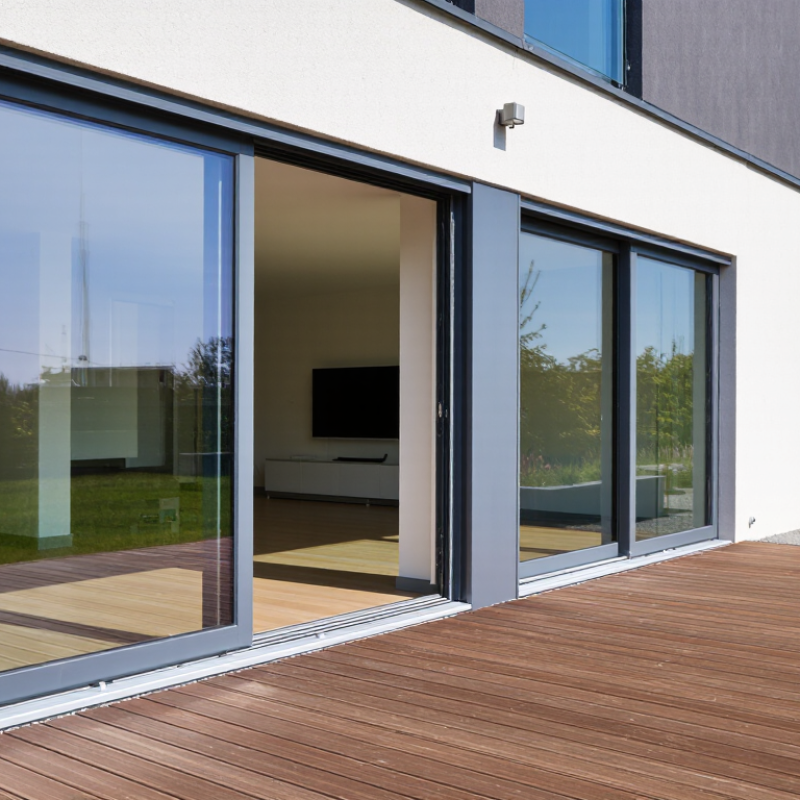
Exterior sliding doors are large glazed systems that open horizontally along tracks. They connect indoor rooms with patios, balconies, or gardens. Unlike interior doors, they must resist rain, wind, temperature changes, and repeated daily use.
They matter because the opening can influence comfort, energy use, and accessibility. The U.S. Department of Energy reports that windows cause about 25–30% of residential heating and cooling energy use. A poorly sealed sliding door can increase drafts and indoor temperature swings.
Look for tested air leakage, water penetration, structural strength, and thermal performance. The NFRC rating system also helps buyers compare U-factor, solar heat gain coefficient, and visible transmittance.
The experience is practical. A smooth track supports easier movement, while a low threshold reduces trip risks. Clear glass brings daylight into darker rooms. Yet larger glass is not automatically better. It may increase heat gain, glare, cleaning work, and privacy concerns. That trade-off is often underestimated.
Frame material
Glass configuration
Drainage
Installation quality
should match the local climate.
Standards such as AAMA/WDMA/CSA 101/I.S.2/A440 provide a useful performance framework, but certification does not correct poor installation. Measure twice. Inspect the sill carefully. A dependable exterior sliding door is not only attractive; it is a tested part of the building envelope.
How to Evaluate China’s Exterior Sliding Door Manufacturers
China Top 10 Exterior Sliding Door Manufacturers?
When evaluating China’s exterior sliding door manufacturers, begin with product evidence, not polished websites. Ask for factory videos, installation photos, and recent project references. A reliable supplier should explain frame alloys, glass thickness, drainage design, roller capacity, and surface treatment clearly. Vague answers signal weak technical control.
Request samples before placing a large order. Operate the door repeatedly. Check whether the panels stay aligned and the lock engages smoothly. Measure the frame corners with a square. Small gaps can become serious problems after installation. Review test reports for air infiltration, water resistance, wind pressure, and thermal performance. Confirm that the reports match the exact model, not a similar product. Factory experience matters too. Ask how many years the production team has handled export projects and custom dimensions.
Communication reveals professional reliability. Can the supplier provide accurate drawings, packing details, and replacement-part policies? Check whether quality inspections occur before loading. Photos should show labels, corner protection, glass spacing, and container packing. Compare quotations carefully. A lower price may exclude hardware, packaging, or testing. That mistake is expensive. No supplier looks perfect. Even experienced manufacturers may miss a detail in a custom order. Record every specification in a signed document, then request a pre-production confirmation. A live video inspection helps, but it is not a substitute for independent testing.
How the Leading Manufacturers Compare by Product and Service
China’s top exterior sliding door manufacturers differ most in product discipline, not catalog size. Compare frame alloys, thermal breaks, glass specifications, drainage, and roller load ratings. A 2024 IEA buildings report states that buildings consume about 30% of global final energy. Better door design can reduce unwanted heat transfer, but only when installation remains airtight.
Product claims need evidence. Ask for U-value reports, air-infiltration results, water-penetration tests, and corrosion testing. The NFRC explains that U-factor measures heat flow, while lower values generally indicate better insulation. Service quality also separates suppliers. Review drawing accuracy, sample approval, packaging protection, replacement-part access, and response times after delivery. A factory may offer impressive testing, yet provide weak site guidance. That gap matters. My own comparison would score technical documents twice: once for completeness, and again for consistency across projects. No scorecard is perfect.
Tips: Request one full-size sample corner, not only photographs. Check the locking action, roller smoothness, gasket compression, and drainage holes. Confirm whether installation manuals include local wall conditions. Also ask for a written warranty with exclusions clearly listed. Industry reports provide useful benchmarks, but they cannot replace hands-on inspection. A polished brochure can still conceal uneven tolerances, incomplete accessories, or slow technical support. Manufacturers deserve scrutiny, and buyers should document every promise before production.
How to Choose the Right Chinese Exterior Sliding Door Manufacturer
Choosing among China’s top exterior sliding door manufacturers requires more than comparing catalog photos. Start with the factory’s experience in outdoor projects, not only its years in business. Ask whether it has supplied doors for humid coasts, cold regions, or high-wind locations. Request project photos, material specifications, and test records. A reliable manufacturer should explain frame alloys, glass structure, drainage design, rollers, locks, and surface treatment clearly.
Inspect a working sample if possible. Slide it repeatedly. Check whether the rollers remain quiet and whether the panels stay aligned. Confirm production tolerances, packaging methods, replacement parts, and warranty terms before placing an order. Certifications can support credibility, but they should match the actual product and market. A polished catalog proves little. No supplier is flawless. Even a good factory may miss a small accessory or misunderstand a custom dimension, so written drawings and approval records matter.
Tips: Compare at least three manufacturers using the same specification sheet. Arrange a video factory inspection or an independent quality check. Ask for a pre-production sample before mass production. Clarify delivery schedules and acceptable defect standards in writing. Pay attention to communication speed and technical answers. If replies stay vague, pause. The cheapest quotation may become expensive after installation problems, damaged glass, or missing hardware. A careful decision often depends on small details that look unimportant at first.
China Top 10 Exterior Sliding Door Manufacturers? How to Choose the Right Chinese Exterior Sliding Door Manufacturer
Use these procurement criteria to evaluate exterior sliding door manufacturers without relying only on price. The weighting reflects the practical priorities commonly used in architectural door sourcing: verified performance, project suitability, production capability, compliance, and after-sales support.
Suggested evaluation method: compare at least three qualified suppliers, request laboratory test reports and project references, and calculate a weighted score using the percentages shown above. Performance certification and installation support should be verified for the specific door system being purchased.