

Choosing the right Feather Flags begins with a clear business objective, not a color chart. A flag outside a café should guide pedestrians toward the entrance. A flag at a trade show should improve booth visibility without blocking neighboring displays. These uses require different heights, bases, fabrics, and message lengths.
Industry evidence supports this practical approach. The Outdoor Advertising Association of America reports that out-of-home advertising remains a strong reach medium because audiences encounter it while moving through public spaces. WARC’s Global Ad Trends also identifies out-of-home media as a growing part of measurable advertising investment. Meanwhile, Grand View Research tracks continued demand for outdoor advertising solutions across retail, events, hospitality, and transportation environments. These reports do not prove that every Feather Flags campaign will succeed. They do show why physical visibility still deserves careful planning.
Wind changes everything. A lightweight flag may look elegant in calm weather but twist around its pole on an exposed roadside. A heavier base may perform better near a busy entrance, while a ground spike suits grass at a weekend event. Material quality matters too. Polyester density, double-sided printing, stitching, and UV resistance affect readability and service life. We should also be honest: no flag replaces strong wording, proper placement, or consistent brand design. The “best” option is often a compromise between portability, durability, budget, and local conditions. This guide explains how to compare those factors, question supplier claims, and choose Feather Flags that support real business goals. Small details matter.
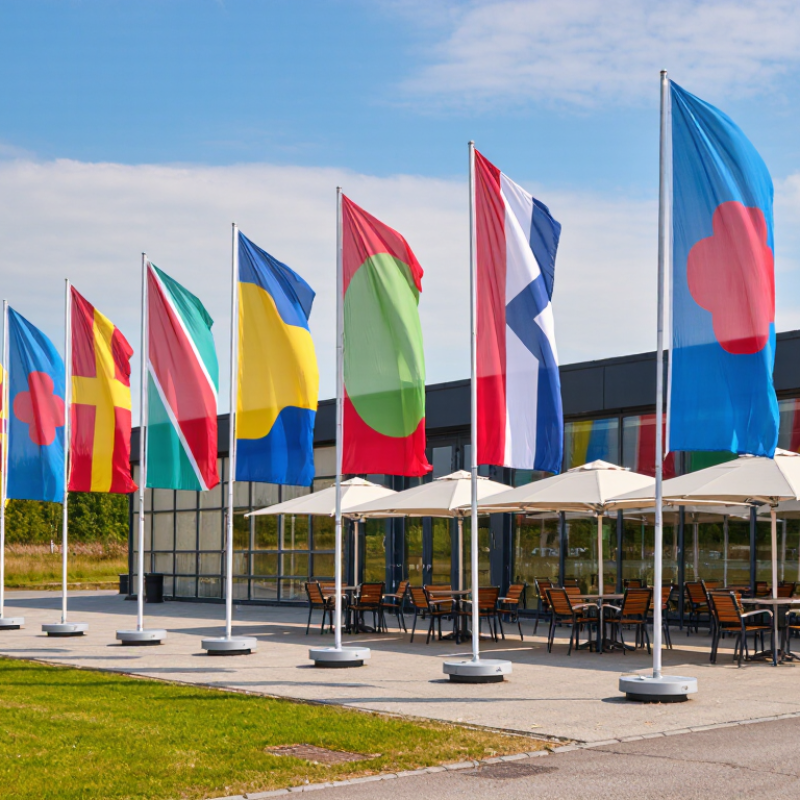
Before choosing feather flags, define what your business needs them to achieve. Are they guiding visitors, announcing a promotion, or improving roadside visibility? Each goal requires a different message, size, and placement. A short message usually performs better near a busy entrance. Use large lettering that remains readable from passing cars. Consider your audience carefully. Families at a weekend market may respond to friendly directions, while trade show visitors need precise information.
The display site also matters. Measure the available width, ground surface, and viewing distance before ordering. Soft soil may accept a ground spike, while concrete requires a weighted base. Check typical wind conditions and select suitable hardware for safer daily use. A flag beside a narrow walkway should not block movement or emergency access. Local venue rules may also limit height, placement, or display duration. In practice, many businesses focus on artwork and forget storage. Damp fabric can develop odors and stains when packed too soon. Allow it to dry fully. I have found that rotating two flags helps maintain a cleaner appearance, although the extra unit increases the budget. Review the goal after a few weeks. If people notice the flag but ignore the message, the design may be attractive yet ineffective.
| Business Goal | Recommended Flag Format | Typical Flag Height | Best Display Location | Recommended Message | Display Requirements | Priority | Suggested Success Measure |
|---|---|---|---|---|---|---|---|
| Attract attention from passing vehicles | Large feather flag with a bold, high-contrast layout | Approximately 3.5–5 m | Roadside frontage, entrance drive, or parking-lot edge | Short offer, service category, or directional phrase | Use large lettering, strong color contrast, adequate setback from traffic, and a secure ground base | High | Directional inquiries, visits from roadside traffic, and offer redemptions |
| Increase visibility for a storefront | Medium or large single-sided feather flag | Approximately 2.5–4 m | Near the entrance, sidewalk frontage, or outside a shopping area | Business category, opening message, or current promotion | Keep the design readable from the main approach and avoid blocking doors, walkways, or accessibility routes | High | Foot traffic, store entries, and promotion-related questions |
| Guide customers to an event or venue | Multiple medium feather flags used as directional markers | Approximately 2.5–3.5 m | Parking areas, entrances, turns, registration points, and queue lines | Arrows, entrance labels, registration, parking, or information | Use consistent colors and simple directional icons; position flags where they remain visible without obstructing movement | High | Fewer wayfinding questions and smoother visitor flow |
| Promote a limited-time sale or launch | Medium feather flag with a replaceable or campaign-specific graphic | Approximately 2.5–3.5 m | Outside the entrance, near a display area, or beside a promotional zone | One main offer, deadline, product category, or call to action | Limit the message to a few words, use a clear focal point, and match the campaign colors with other marketing materials | High | Offer engagement, coupon use, sales inquiries, or campaign-specific traffic |
| Build awareness at a community event | Several matching feather flags with a simple identity or message | Approximately 2.5–4 m | Booth perimeter, event entrance, queue area, or high-traffic pedestrian zone | Organization type, key service, campaign theme, or short slogan | Use repeatable layouts, keep text legible at walking distance, and coordinate the flags with booth signage | Medium | Conversations, information requests, sign-ups, and booth visits |
| Create a visible boundary or queue area | Small or medium feather flags placed at regular intervals | Approximately 2–3 m | Queue entrances, service lines, outdoor waiting areas, or temporary barriers | Wait here, entrance, pickup, information, or service instructions | Use enough spacing for clear sightlines while preserving walking and emergency access | Medium | Queue organization, reduced confusion, and improved visitor movement |
| Advertise recurring outdoor services | Durable medium feather flag with a reusable message | Approximately 2.5–3.5 m | Service location, appointment area, entrance, or roadside property edge | Service name, operating status, phone number, or web address | Choose weather-resistant materials, inspect hardware regularly, and use a base suitable for the surface | High | Inbound calls, website visits, appointments, or service inquiries |
| Support temporary indoor or sheltered displays | Small feather flag with a compact base | Approximately 1.8–2.5 m | Indoor entrances, covered patios, trade-show areas, or reception spaces | Welcome message, product category, or service highlight | Confirm ceiling clearance, use a stable low-profile base, and avoid placing the flag where it restricts visibility | Low | Visitor orientation, display engagement, and qualified conversations |
| Maintain visibility in changing weather | Medium or large flag with a flexible pole and weighted or water-fill base | Approximately 2.5–4 m | Outdoor locations exposed to moderate wind and changing conditions | Short, high-contrast message that remains clear when the fabric moves | Check the manufacturer’s wind guidance, secure the base correctly, and take the flag down during severe weather | High | Display uptime, fabric condition, and continued message visibility |
Planning note: Flag height, base type, spacing, and outdoor suitability should be confirmed with the supplier for the specific site, surface, local weather conditions, and applicable safety requirements.