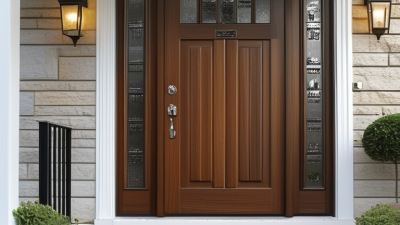
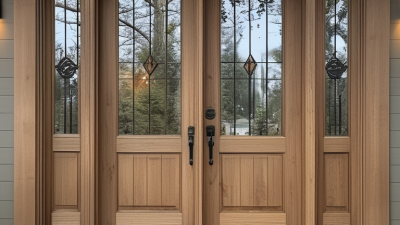
How to Choose the Best UPVC Front Doors?

Choosing the right upvc front doors is more than selecting an attractive entrance. Your front door affects security, warmth, ventilation, noise, and daily comfort. A strong choice should suit your home’s structure, local weather, and personal routine. It should also open smoothly after years of use.

Begin by examining the door’s frame, glazing, locking system, and installation quality. Experienced installers know that even a well-made door can perform poorly when the frame is measured incorrectly. Look for clear product specifications, reliable warranty terms, and evidence of tested security performance. Check whether the manufacturer follows recognized industry standards. Do not rely on appearance alone.

Small details matter. A tight weather seal can reduce cold drafts around the hallway. Reinforced panels may improve stability near busy streets. Frosted glass can bring daylight while protecting privacy. Ask how the hinges, locks, and drainage channels should be maintained. The answers reveal the supplier’s technical knowledge.

No door is perfect.

Budget, design, thermal performance, and security may compete with one another. A highly decorative style might need more cleaning. A darker finish may show scratches more clearly. These issues deserve honest consideration before ordering. Compare quotations carefully, including delivery, removal, fitting, and aftercare. Speak with qualified professionals, but keep your own priorities visible. The best upvc front doors are not simply the most expensive option. They are properly measured, responsibly manufactured, correctly installed, and suitable for your home.

How to Choose the Best UPVC Front Doors?

Define Your UPVC Front Door Needs and Priorities

How to Choose the Best UPVC Front Doors?

Define Your UPVC Front Door Needs and Priorities

Start with the entrance itself. Measure the opening, wall thickness, threshold height, and available space for the door swing. A busy hallway may need an outward-opening design, while a narrow porch may require a different solution. Note your main concerns: warmth, security, noise reduction, appearance, or low maintenance. A door can perform well in one area and disappoint in another.

Consider the local climate and daily use. In exposed locations, strong weather seals and a durable threshold matter greatly. For colder rooms, compare the door’s thermal performance rather than judging by appearance alone. Look for clear product specifications, independent test evidence, and suitable locking systems. Ask the installer how the frame will be fixed and sealed. Poor installation can reduce the benefits of a well-made door. That part is easy to overlook.

Compare UPVC Door Styles, Materials, and Construction Quality

When I assess uPVC front doors, I compare style with the property’s proportions and daily use. A flush door gives a clean, modern appearance. Glazed designs bring daylight into darker hallways. Decorative panels create a softer, traditional character. However, more glass can reduce privacy and may require careful glazing choices. Style should serve the entrance, not overpower it. Looks matter, but only partly.

The visible surface is usually uPVC, yet the inner construction deserves closer attention. Ask whether the frame contains galvanized steel reinforcement, especially around hinges and the locking side. Double-glazed or laminated glass can improve insulation, security, and noise control. Weather seals should sit evenly and remain flexible. I once focused too heavily on panel appearance and overlooked a weak threshold detail. That was a useful mistake.

Construction quality becomes clearer at close range. Check welded corners for neat, continuous joins. Open and close the door several times. Strong hinges should move without rubbing, while a multipoint lock should engage smoothly. The threshold needs effective drainage and a stable connection to the frame. Reliable installers should provide accurate measurements, product specifications, and independent test evidence where available. Still, certificates do not replace careful fitting. Measure twice. A slightly poor installation can spoil an otherwise well-made door.

Evaluate Energy Efficiency, Security Features, and Weather Resistance

How to Choose the Best UPVC Front Doors?

A good UPVC front door should reduce heat loss without making the entrance feel heavy or poorly balanced. Check its U-value, but do not judge insulation from this number alone. Double glazing, insulated panels, and continuous rubber seals all affect indoor comfort. On a cold morning, touch the interior frame. It should not feel noticeably chilled. Ask for independent test reports, not vague efficiency claims.

Security depends on the complete door system. Look for a reinforced frame, a reliable multipoint locking mechanism, protected hinges, and impact-resistant glazing. The cylinder should resist common tampering methods, while the handle should feel firm during repeated use. A strong lock cannot correct a weak installation. Confirm that trained installers secure the frame to the surrounding wall, with no visible gaps or excessive foam.

Weather resistance matters in daily life, especially near busy roads or coastal areas. Inspect the threshold, drainage channels, and seal corners carefully. Water should move away from the door, not collect beside it. Wind tests and air-permeability ratings provide useful evidence, although real performance can fall after careless fitting. I would also check the warranty terms for discolouration, warped panels, and failed seals. Small details are easy to overlook. That is where regret often begins.

Select Suitable Dimensions, Glazing, Colors, and Hardware

Choosing the Best UPVC Front Door

Measure the structural opening at three points, both horizontally and vertically. The smallest measurement usually deserves attention. Allow space for the frame, threshold, sealant, and opening swing. A door that fits tightly on paper may still bind after seasonal movement or uneven masonry. Check the threshold against the finished floor, especially where tiles or insulation will be added. The U.S. Department of Energy reports that windows may account for 25–30% of home heating and cooling energy use. That figure is not a door statistic, but it shows why poorly fitted glazing deserves scrutiny.

Choose glazing by climate, orientation, and privacy needs. Low-emissivity double glazing can reduce heat transfer, while laminated glass improves impact resistance and sound control. Ask for documented U-factor and solar heat gain coefficient values, not vague phrases such as “energy efficient.” The National Fenestration Rating Council explains that lower U-factor values generally indicate better insulation. Triple glazing can help in cold regions, though it may add weight and cost. More glass is not always better.

Color should suit the façade and remain practical near muddy paths or busy streets. Dark finishes can absorb strong sunlight and may demand careful frame design. Hardware needs equal attention. Select corrosion-resistant hinges, a firmly mounted handle, a multi-point locking system, and an adjustable keep. Test the key action and handle return before installation. I would avoid choosing hardware by appearance alone. It often feels like a small decision. It is not. The IEA’s 2024 buildings report places buildings at roughly 30% of global final energy demand, making installation quality a measurable concern.

Verify Installation Standards, Warranty Coverage, and Maintenance Needs

How to Choose the Best UPVC Front Doors?

A good UPVC front door should meet verified installation standards, not just look attractive. Check whether the door complies with EN 14351-1 and relevant national requirements. For security-focused installations, ask for documented PAS 24 testing where applicable. The installer should provide declared U-values, air-permeability results, and water-tightness information. Energy Saving Trust estimates that up to 20% of household heat may escape through windows and doors. Poor fitting can increase that loss. Cold air around the threshold is an obvious warning sign.

Warranty details need careful reading. A frame warranty may last ten years, while locks, handles, glass, and seals may have shorter coverage. Installation defects are not always covered by the product warranty. Ask who will repair a failed seal or a distorted frame. Get exclusions in writing. Check whether the warranty requires approved installation or annual maintenance. The Glass and Glazing Federation stresses the importance of competent installation and clear consumer documentation. That sounds routine, but many buyers overlook it.

Maintenance is simple, but not optional. Clean drainage channels twice yearly, especially after autumn leaves collect near the sill. Wipe seals with mild soapy water and inspect cracked or flattened rubber. Lubricate hinges and locking points with the correct product. Never force a stiff handle. It may indicate alignment problems. I have seen doors blamed for draughts when the threshold had settled. That assumption was wrong. Record installation photos, product specifications, and service dates. A neat folder can protect your warranty later.

How to Choose the Best UPVC Front Doors? - Verify Installation Standards, Warranty Coverage, and Maintenance Needs

Evaluation Area What to Verify Reliable Evidence or Standard Practical Acceptance Criteria Why It Matters
Product Compliance Confirm that the complete external doorset, not only the UPVC profile, has been assessed for its intended use. EN 14351-1 covers performance characteristics for external pedestrian doorsets and windows. Request a current Declaration of Performance or equivalent technical documentation where applicable. It helps confirm that the doorset has been evaluated as a complete product for relevant performance characteristics.
UPVC Profile Quality Check the profile classification, wall thickness, reinforcement provisions, weather seals, and compatibility of components. EN 12608-1 classifies unplasticized polyvinyl chloride profiles for windows and doors. The profile specification should match the door size, exposure level, glazing arrangement, and local building requirements. A suitable profile and reinforcement system supports dimensional stability, security, and long-term operation.
Air Permeability Ask for the tested air-permeability classification of the complete doorset. EN 12207 provides air-permeability classifications for windows and doors. Prefer documented test results for the same or a technically equivalent doorset configuration. Lower uncontrolled air leakage can improve comfort and reduce drafts around the entrance.
Watertightness Verify resistance to driving rain, including the threshold and frame-to-wall junction. EN 12208 provides watertightness classifications for windows and doors. The selected rating should suit the building location, exposure to wind-driven rain, and threshold design. Good water resistance helps reduce the risk of dampness, staining, and deterioration around the opening.
Wind Resistance Check the wind-load classification for the completed doorset and its anchoring arrangement. EN 12210 provides resistance-to-wind-load classifications for windows and doors. The rating should be suitable for the door dimensions, building height, and local wind exposure. Correct sizing and anchoring help prevent excessive deflection, binding, and seal failure.
Installation Method Confirm that the frame is level, plumb, square, mechanically fixed, and sealed to the surrounding structure. Use the installer’s documented method and follow applicable local building regulations and manufacturer instructions. Check even gaps, smooth operation, secure fixings, continuous perimeter sealing, and a properly supported threshold. Even a high-performing doorset can leak or become difficult to operate if it is installed incorrectly.
Threshold and Drainage Review threshold height, accessibility requirements, drainage paths, and protection from standing water. Confirm compliance with applicable accessibility, moisture-management, and local construction requirements. Drainage openings must remain unobstructed, and the threshold must be supported across its length. A well-designed threshold reduces water ingress risk and helps prevent movement or premature seal wear.
Security Hardware Review the cylinder, multipoint locking system, hinges, keeps, glazing retention, and handle operation. Ask for independently tested security performance where security certification is important for the project. The lock should engage fully without excessive force, and hardware should be compatible with the doorset. Security depends on the complete door assembly and installation, not on the panel or lock alone.
Glazing Safety Determine whether safety glazing is required near the floor, beside the door, or in impact-prone areas. Follow applicable local glazing safety rules and the relevant safety-glass requirements for the installation location. Use documented safety-glazing specifications where the glass could be subject to human impact. Appropriate glazing reduces the likelihood of serious injury if the glass is accidentally struck.
Thermal Performance Compare the whole-door U-value or declared thermal performance rather than judging insulation by profile material alone. Request the declared or calculated performance for the complete doorset, including frame, panel, glazing, and threshold. Select a performance level that aligns with local energy requirements and the building’s heating or cooling needs. Whole-door performance gives a more realistic indication of heat transfer through the entrance.
Warranty Scope Check separate coverage periods for the frame, door panel, glazing, hardware, seals, and installation work. Read the written warranty terms before purchase; coverage periods and conditions vary by supplier and project. The warranty should identify the responsible party, claim process, start date, remedy, and response times. Clear scope prevents disputes when a defect involves installation, hardware, glazing, or normal wear.
Warranty Exclusions Identify exclusions for poor maintenance, accidental damage, unauthorized alterations, settlement, condensation, and extreme conditions. Review all exclusions, maintenance obligations, inspection requirements, and transferability provisions. Do not rely on verbal promises; retain the contract, installation record, product documents, and photographs. Many warranty claims depend on evidence that the door was correctly installed and reasonably maintained.
Routine Cleaning Clean UPVC surfaces, glazing, seals, threshold channels, and drainage openings at regular intervals. Use mild soapy water and a soft cloth unless the care instructions specify another method. Avoid abrasive cleaners, solvent-based products, sharp tools, and paint products that can damage UPVC or seals. Regular cleaning preserves appearance and prevents dirt from interfering with seals and drainage.
Hardware Maintenance Inspect hinges, handles, keeps, locking points, and cylinders for looseness, stiffness, or unusual noise. Follow the hardware supplier’s lubrication guidance and use only compatible products. Lubricate moving parts when required and tighten or replace components using suitable tools and parts. Preventive maintenance helps maintain smooth locking and reduces stress on the frame and multipoint mechanism.
Weather Seals Inspect gaskets and compression seals for cracking, flattening, shrinkage, or gaps at corners. Replace damaged or permanently compressed seals with compatible profiles. The door should close with consistent contact around the perimeter without excessive handle force. Effective seals support air tightness, water resistance, and indoor comfort.
Adjustment and Inspection Arrange an inspection if the door drags, fails to latch, leaks, or develops uneven gaps. Use a qualified installer or service technician for significant adjustments and component replacement. Do not remove structural fixings or alter the threshold without checking the installation instructions. Incorrect adjustments can damage hardware, reduce security, or compromise the weather seal.
Documentation Checklist Collect product specifications, test evidence, installation instructions, warranty terms, maintenance guidance, and completion records. Documentation should identify the exact doorset configuration and the responsible installer. Keep records for future maintenance, warranty claims, replacement parts, and property handover. Complete records make it easier to verify performance and resolve technical issues throughout the door’s service life.

Note: Required performance levels, accessibility provisions, safety-glazing rules, and warranty conditions vary by location, building type, exposure, and contract. Always confirm the applicable local requirements and obtain documentation for the exact UPVC doorset being installed.