How to Choose the Best Wooden Front Door from China?
Choosing the best wooden front door from China requires more than comparing photographs and prices. A beautiful oak door may still warp if its moisture content is unsuitable for your climate. Start by checking the timber species, kiln-drying process, core construction, and finishing system. Ask the supplier for clear product drawings, sample photographs, and recent quality inspection records. Details matter.
Look closely at the joints, panel alignment, threshold, hinges, and weather seals. These small features reveal manufacturing discipline. For coastal areas, marine-grade finishes and corrosion-resistant hardware deserve serious attention. For colder regions, insulated cores and stable engineered timber can improve performance. Confirm the door’s dimensions, swing direction, glazing specification, and packaging method before payment. A trusted manufacturer should explain tolerances instead of promising perfection.
Supplier experience also matters. Review factory history, export markets, production capacity, and independent customer feedback. Where possible, request a physical sample or arrange a third-party inspection before shipment. Certifications can support confidence, but they should match the actual product and destination requirements. A certificate alone proves little.
Do not ignore installation. Even a well-built wooden front door can fail when the frame is poorly sealed or incorrectly fitted. Your local installer should verify the opening, drainage, and wall condition. Some buyers focus heavily on appearance and regret it later. I would too. The right choice balances timber quality, craftsmanship, climate suitability, documented reliability, and long-term maintenance. Take time to question unclear claims. That caution often saves more than a low quotation.
Understanding Wooden Front Door Types and Construction
How to Choose the Best Wooden Front Door from China?
Understanding Wooden Front Door Types and Construction
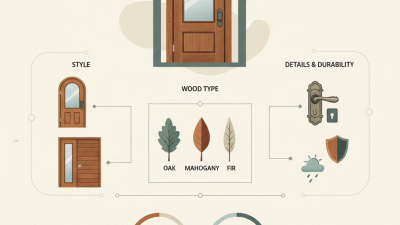
Choosing a wooden front door from China begins with its construction, not its color. Solid wood doors offer natural grain and strong visual character. However, untreated timber can twist when humidity changes. Engineered wood uses layered materials for better dimensional stability. A veneer surface can provide a premium appearance without using thick solid timber throughout. The door core matters. A dense core improves sound control, weight, and resistance to impact.
Construction details influence long-term performance. Look for reinforced mortise-and-tenon joints or carefully bonded finger joints. These connections should remain tight around the corners. Multi-layer edge sealing helps reduce moisture absorption. A properly fitted threshold should prevent water from reaching the lower rail. Small gaps can become serious problems. They often appear after several seasons.
Ask the manufacturer for timber moisture readings, material specifications, and independent test documents. Factory photographs are useful, but physical samples reveal more. Check the corner joints, veneer alignment, surface finish, and door weight. In one inspection, a beautiful sample concealed uneven sealing near the bottom edge. That mistake changed my view of visual quality. For humid regions, request weather-resistant coatings and UV protection. Confirm the packing method, installation tolerances, and replacement policy in writing. A reliable supplier should answer these questions clearly, even when the answer is inconvenient.
How to Choose the Best Wooden Front Door from China?
Understanding Wooden Front Door Types and Construction
This chart compares indicative whole-door U-values for common wooden front door constructions. Lower values indicate better thermal insulation. Solid wood doors provide a traditional appearance and strong durability, while engineered timber and insulated-core constructions generally offer better dimensional stability and energy performance. Actual results depend on door thickness, glazing, seals, frame design, installation quality, and test standards.
Reference basis: typical performance ranges reported for residential entrance doors under EN 14351-1 and thermal transmittance assessment methods in EN ISO 10077. Values are representative industry ranges, not brand-specific product data.
Defining Your Size, Style, and Performance Requirements
Choosing a wooden front door from China begins with accurate measurements, not attractive photographs. Measure the finished wall opening, not only the old door slab. Record width, height, jamb depth, swing direction, and threshold height. Leave room for installation adjustment. My first measurement ignored the uneven floor, and the final clearance became too tight.
Style should support the building rather than compete with it. Consider panel lines, glass area, wood grain, stain color, and handle placement. A tall door can make a narrow entrance feel more balanced. Dark finishes often highlight grain, but they may show scratches sooner. Ask for a physical sample before approving production. Digital colors can mislead. They really can.
Performance requirements need specific language. Request the wood species, moisture content, core construction, sealant system, and hardware material. For humid regions, prioritize stable construction and complete edge sealing. For colder climates, check insulation details, weatherstripping, and the threshold design. Ask for test reports covering air leakage, water resistance, and wind pressure when available. Confirm which laboratory issued each report and whether the tested design matches your order. A certificate alone proves little if the dimensions differ. I would also request production photos, packing details, and a written inspection checklist. Independent inspection adds cost, but it can reveal warped panels, uneven stain, or missing hardware before shipment. Leave time for corrections; custom doors rarely forgive rushed decisions.
Evaluating Chinese Manufacturers and Product Quality
Choosing a wooden front door from China requires more than comparing online prices.
A reliable assessment begins with the manufacturer, not the photograph. Ask how long the factory has produced exterior doors. Request workshop images, production records, and recent export references. A serious supplier should explain timber sourcing, kiln-drying, joint construction, and moisture control. Vague answers deserve caution.
Product quality becomes visible in a physical sample.
Check whether the door leaf stays flat after temperature changes. Measure moisture with a meter, especially near the lock edge and bottom rail. Inspect corner joints, sealant lines, veneer matching, and drainage details. The finish should feel even, without bubbles or sharp edges. Ask for coating specifications and test documents, then verify they match the actual construction. A certificate alone proves little.
Before placing a large order, approve a signed sample with exact dimensions, wood species, glass type, hardware, and finish level. Confirm packaging through a drop or vibration test, because damaged corners are costly. Clarify inspection steps, acceptable tolerances, replacement procedures, and delivery records. Keep written communication. It protects both sides.
A factory may look impressive online. It can still miss small details. My own evaluation would include an independent pre-shipment inspection. That extra cost may prevent warped panels, uneven color, or incorrect hardware. The honest choice is not always the cheapest one. It is the manufacturer that documents limitations and corrects mistakes promptly.
Checking Certifications, Shipping Terms, and Installation Support
Choosing a wooden front door from China requires more than comparing catalog prices. Verify the timber species, moisture content, and finishing process. Ask for laboratory reports covering U-value, air leakage, water resistance, and wind load. Requirements differ by destination, so local building codes must guide your purchase.
Certification details deserve careful checking. Request chain-of-custody evidence for responsibly sourced timber, plus product test reports from an accredited laboratory. A certificate without a matching model number is weak evidence. Check the factory’s inspection records and confirm whether documents remain valid for your market. The International Energy Agency reports that buildings account for about 30% of global energy demand, making door insulation worth serious attention.
Shipping terms can change the real cost. Under Incoterms 2020, clarify who pays freight, insurance, customs clearance, and unloading. UNCTAD’s Review of Maritime Transport reports that over 80% of global merchandise trade by volume moves by sea. Plan for moisture protection, corner guards, and a wooden crate. Installation support should include a measured drawing, sill details, hardware instructions, and video guidance. A local installer still matters; remote advice cannot correct a badly prepared opening. I have seen attractive doors fail because the threshold was ignored.
Tips:
Ask for a pre-shipment inspection with photographs. Confirm the door swing, wall thickness, frame tolerance, and replacement-part policy in writing. Leave realistic time for customs delays. My own caution is simple: the cheapest quote often excludes installation details, and that omission becomes expensive later.