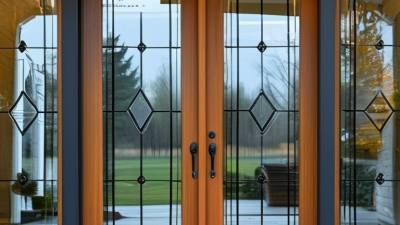


Fiberglass doors are built for homeowners who want dependable performance without sacrificing appearance. They combine reinforced skins with insulated cores, creating a door that feels solid but does not demand constant maintenance. Unlike many wood doors, fiberglass doors resist moisture, warping, cracking, and insect damage. That matters near a wet entryway, where rainwater can collect along the threshold.
Door-industry consultant Gary Johnson has said, “A door is only as good as its installation.” That warning deserves attention. Even an excellent fiberglass door can leak air when the frame is poorly aligned or the weatherstripping is compressed incorrectly. The details matter: a level sill, tight hinges, sealed edges, and a lock that closes without force.
Fiberglass doors can also imitate oak, mahogany, or smooth painted surfaces. A textured grain may look convincing from the sidewalk. Still, they are not perfect. Some finishes fade under strong sunlight, and repairs can be less straightforward than repainting wood. Homeowners should check the manufacturer’s warranty, energy rating, hardware quality, and local climate before choosing a model.
This guide explores what fiberglass doors are and why many homeowners choose them. It considers durability, insulation, security, design flexibility, cost, and installation. The honest answer is practical. Fiberglass doors are not automatically the best choice. They are often the best-balanced choice.
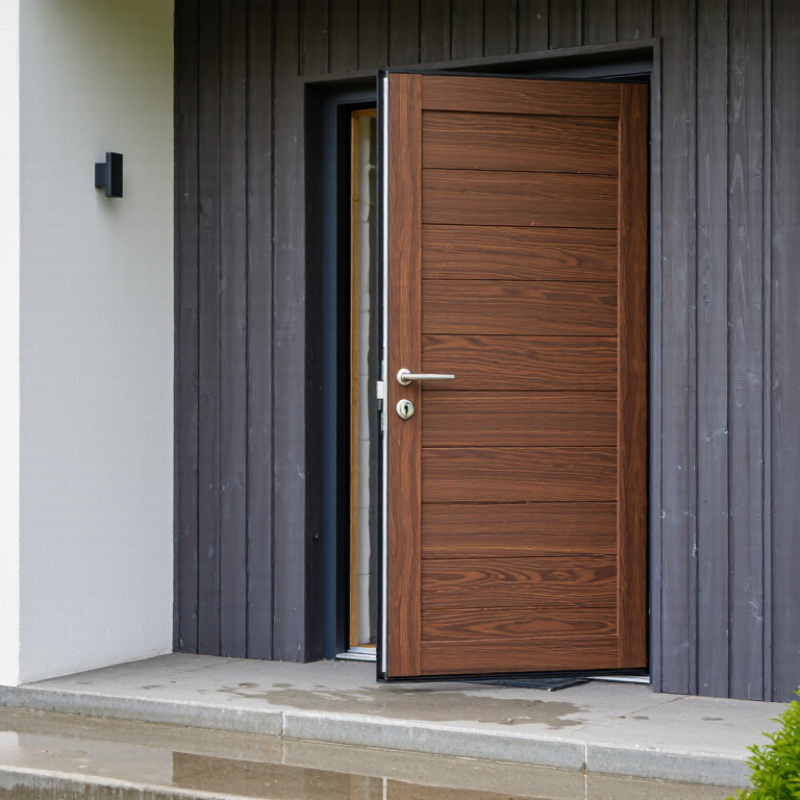
Fiberglass doors use durable glass-fiber skins over an insulated foam core. The skins resist dents, moisture, and everyday temperature changes. Their surface can resemble painted wood without demanding constant refinishing. Most cores use polyurethane or similar closed-cell foam. This structure reduces heat transfer through the door slab. R-5 to R-10 is a common insulation range for many fiberglass door assemblies. Higher values usually reflect a thicker core or better overall construction.
Small caveat: The R-value is not always the same across the entire door system.
In a real installation, the frame and edges matter greatly. A highly insulated slab can still leak air around an uneven frame. Proper weatherstripping helps maintain the stated performance. It also reduces drafts near the threshold. Check the threshold carefully. Gaps often appear there first.
Fiberglass can support lower heating and cooling loads, but results depend on climate, orientation, and installation quality. A door facing strong afternoon sun may still heat up noticeably.
I once treated the advertised R-value as the whole story; that assumption needed correction.
The frame, glass panels, hardware, and sealant all influence comfort. Regularly inspect cracked seals, loose hinges, and compressed weatherstripping. That detail is easy to miss.
The best choice balances insulation, moisture resistance, maintenance needs, and the local weather.

What Are Fiberglass Doors and Why Choose Them?
Fiberglass doors begin with molded skins shaped under controlled heat and pressure. These skins create the visible woodgrain or smooth surface. Inside, a polyurethane core fills the cavity and limits heat transfer. The core also adds stiffness without the weight of solid wood. The U.S. Department of Energy reports that windows and doors can influence roughly 25–30% of residential heating and cooling energy use. That makes the core and perimeter seal important, not decorative details.
Manufacturers usually reinforce lock areas with denser material or internal blocking. Edge seals then close the narrow joint between the slab and frame. A continuous weatherstrip helps reduce drafts, moisture entry, and rattling. The National Fenestration Rating Council evaluates door assemblies through measurements such as U-factor and solar heat gain coefficient. These figures are useful, but installation still matters. A well-rated door can perform poorly if the sill is uneven or the seal is compressed incorrectly. Small gaps matter. In practice, I would inspect the corners first, because they often reveal rushed fitting. Fiberglass also resists rot better than wood, yet it is not maintenance-free. Prolonged moisture, impact, or poor drainage can damage coatings and seals. Choosing a door should therefore involve the complete assembly: molded skin, polyurethane core, frame, threshold, and edge seals.
A practical overview of the main materials, manufacturing stages, performance characteristics, and maintenance considerations of fiberglass doors.
| Door Element or Stage | What It Is | How It Is Made or Used | Typical Performance Benefit | Important Consideration |
|---|---|---|---|---|
| Molded Fiberglass Skin | A reinforced polymer outer layer, commonly made with glass fibers embedded in a resin matrix. | The material is formed in a mold under controlled heat and pressure to create the door face, texture, and profile. | Provides resistance to dents, moisture exposure, corrosion, and many common outdoor conditions. | The surface can still be damaged by severe impact, improper drilling, or unsuitable installation practices. |
| Wood-Grain or Smooth Surface | A molded texture or a flat finish designed for a specific appearance. | Texture is incorporated into the mold rather than being cut into a solid wood slab. | Can reproduce the appearance of painted or stained wood while requiring less routine refinishing than natural wood. | Color and finish durability depend on the coating system, exposure, preparation, and local climate. |
| Polyurethane Foam Core | A rigid, low-density insulating foam placed between the exterior skins. | The core is fitted or injected between the skins and allowed to bond and cure as part of the door assembly. | Reduces heat transfer and adds stiffness without the weight of a solid wood construction. | Insulation performance varies with core thickness, glass area, weather seals, frame design, and installation quality. |
| Reinforcement Members | Structural components placed inside the door to support hardware and maintain alignment. | Wood, composite, or other engineered reinforcements may be positioned around locks, hinges, and selected edges. | Improves screw-holding capacity and helps support hinges, handles, and locking hardware. | Hardware should be installed only where the door manufacturer or construction details provide adequate reinforcement. |
| Stiles and Rails | Vertical and horizontal structural zones that define the door’s perimeter and panel layout. | They are integrated into the molded skin and internal core construction to form the overall door geometry. | Help maintain dimensional stability and support the door’s panels, edges, and hardware locations. | Openings for glass, pet doors, or other modifications can affect strength and thermal performance. |
| Edge Seals | Sealed or protected edge areas that limit moisture entry and protect the internal materials. | Edges may receive coatings, sealants, caps, or compression seals depending on the door design. | Helps reduce the risk of moisture-related deterioration and supports long-term dimensional stability. | Cut edges, drilled holes, and unsealed field modifications should be protected according to installation instructions. |
| Weatherstripping Interface | The contact area between the door, frame, and flexible weather seals. | Compression seals are fitted around the frame or door perimeter to close small gaps when the door is shut. | Helps limit drafts, water penetration, dust, and outdoor noise. | Correct alignment and compression are essential; worn or incorrectly fitted seals can reduce performance. |
| Manufacturing Quality Control | Inspection of dimensions, bonding, surface finish, hardware preparation, and seal continuity. | Finished doors are checked for visual defects, fit, operation, and compliance with applicable specifications. | Consistent production can improve fit, operation, durability, and resistance to air and water leakage. | Actual results depend on the complete door system, including the frame, sill, glazing, hardware, and installation. |
| Thermal Performance | The door’s ability to slow heat flow between indoor and outdoor areas. | Performance comes from the combination of the insulated core, low-conductivity components, glazing, seals, and frame. | Usually offers better insulation than an uninsulated solid-metal door of similar design. | A door with extensive glass may perform differently from an opaque door; published U-factor values are system-specific. |
| Dimensional Stability | Resistance to excessive swelling, shrinking, or warping caused by moisture and temperature changes. | Composite skins and an insulated core are engineered to limit movement compared with many solid-wood constructions. | Can support reliable operation in environments with seasonal humidity and temperature variation. | Improper shimming, frame movement, prolonged water exposure, or poor drainage can still cause operating problems. |
| Maintenance Requirements | Routine cleaning, inspection, and occasional renewal of exterior finishes and seals. | Clean with mild soap and water, inspect edges and hardware, and refinish or reseal when recommended. | Generally requires less frequent maintenance than painted or stained natural wood exposed to weather. | Harsh solvents, abrasive cleaners, and unapproved paint products may damage the surface or finish. |
| Environmental Resistance | Ability to withstand ordinary exposure to rain, humidity, sunlight, and temperature changes. | Resistance is provided by the molded skin, protective finish, sealed edges, and water-managed frame system. | Suitable for many exterior applications when properly finished, installed, and maintained. | No exterior door is maintenance-free; direct sun, coastal air, standing water, and extreme weather require appropriate specifications. |
| Best-Fit Applications | Exterior entry doors, patio doors, utility entrances, and other locations needing insulation and low-maintenance performance. | Selected according to opening size, exposure, security requirements, glazing needs, local conditions, and design preferences. | Offers a balance of appearance, energy efficiency, moisture resistance, and maintenance convenience. | Product selection should consider tested performance ratings and the compatibility of the entire installed door assembly. |
Fiberglass doors combine a molded outer skin with an insulated core. The result feels solid, but it can still resist heat flow effectively. The U-factor is the key number. It measures heat transfer through the complete door assembly. Lower values indicate better insulation, measured in Btu/h·ft²·°F.
Do not judge performance from the center panel alone. NFRC ratings cover the whole tested unit, including the frame, glazing, and edge conditions. That detail matters beside a cold hallway or a sunlit entryway. The U.S. Department of Energy reports that windows, doors, and skylights can represent about 25% to 30% of residential heating and cooling energy use. A poorly sealed threshold can weaken an otherwise strong rating.
ENERGY STAR door requirements use climate-specific performance criteria, rather than one universal number. Check the NFRC label and compare its U-factor with the applicable ENERGY STAR specification. A lower U-factor usually helps in cold climates, while solar heat gain may deserve attention in hot regions. Weatherstripping, installation, and frame design also affect real results. Field performance is messier than laboratory testing. I have seen a well-rated door lose comfort through a loose sweep and an uninsulated jamb. That is worth remembering.
Fiberglass doors are exterior doors made with a glass-fiber-reinforced polymer skin, usually over an insulated core. Their energy performance is evaluated by the NFRC U-factor: a lower U-factor means better resistance to heat transfer. The chart shows the maximum U-factor thresholds used for ENERGY STAR residential door qualification by U.S. climate region.
How to read it: Fiberglass construction can support efficient insulated door designs, but the actual result depends on the complete door assembly, including the core, frame, glazing, weatherstripping, and installation. When comparing products, look for the NFRC label and choose a certified door with a U-factor at or below the applicable ENERGY STAR limit for your climate region.
Reference: ENERGY STAR Residential Windows, Doors, and Skylights program criteria; NFRC fenestration rating terminology. Lower U-factor values indicate better insulating performance.
What Are Fiberglass Doors and Why Choose Them?
Fiberglass doors combine a molded outer skin with a reinforced core. They resist moisture, dents, and daily temperature changes better than many traditional materials. Yet durability is not proven by appearance alone. Test data matters, especially when the door separates conditioned rooms from outdoor weather.
ASTM E283 measures air leakage through a closed door assembly under a controlled pressure difference. Technicians use calibrated equipment to detect airflow around seals, joints, and hardware areas. Lower leakage can support better comfort and energy performance. Installation still matters. A strong laboratory result may weaken when the frame is uneven or the weatherstripping is compressed poorly. Small gaps matter.
AAMA/WDMA/CSA A440 evaluates fenestration performance through coordinated tests. Depending on the product configuration, assessments can include air infiltration, water penetration, structural resistance, and operating force. These tests place practical stress on the complete assembly, not only the fiberglass skin. A properly tested door should open smoothly after exposure to pressure and simulated weather. That detail is easy to overlook.
From field inspections, I have found that test reports deserve careful reading. Check the tested size, configuration, pressure levels, and installation conditions. Do not assume every fiberglass door reaches the same grade. Standards evolve, and documents can be misunderstood. A perfect laboratory result is not a promise of perfect installation. It is evidence, not certainty.
What Are Fiberglass Doors and Why Choose Them?
Why Choose Fiberglass: Low Maintenance, Security, Style, and Long-Term Value
Fiberglass doors use durable composite skins around an insulated core. They can resemble painted wood without demanding the same upkeep. In practical installations, homeowners often notice fewer problems with swelling, peeling, and seasonal movement. A quick wipe usually removes dust and fingerprints. Still, no door is maintenance-free. Hinges, weatherstripping, and locks need occasional inspection.
Security depends on the complete entry system, not the door material alone. A reinforced frame, quality deadbolt, strong strike plate, and accurate installation matter greatly. Fiberglass can resist dents and moisture better than many traditional materials. However, careless fitting can weaken any entrance. Check the frame after heavy weather. Small gaps can reduce both security and energy efficiency.
Style is another practical advantage. Fiberglass surfaces can show wood-like grain, smooth color, or decorative glass. They suit modern apartments, traditional houses, and darker exterior palettes. Insulated cores may also help reduce heat transfer near the entryway. Long-term value comes from fewer refinishing tasks, reliable performance, and a stable appearance. Yet color choice deserves thought. Dark finishes may absorb more heat in strong sunlight, and poorly sealed edges can still deteriorate. Measure carefully, review the local climate, and choose hardware that matches daily use.
Get the latest news straight from us on all our new products, features, services, and much more!