

China Top 10 Folding Patio Door Suppliers?

China’s folding patio doors market deserves careful comparison, not a rushed supplier list. Demand is rising as homeowners seek wider openings, stronger daylight, and smoother indoor-outdoor movement. Grand View Research reports continued growth in the global doors market, driven by residential renovation and energy-efficient building products. Meanwhile, Mordor Intelligence identifies Asia-Pacific as a major growth region for folding door systems. These reports indicate momentum, but they do not prove that every Chinese manufacturer offers equal quality.

This guide examines ten potential Chinese suppliers through practical criteria. These include factory experience, aluminum alloy grades, thermal-break design, glass specifications, weather sealing, hardware cycles, certifications, and after-sales support. A reliable supplier should provide test evidence for air leakage, water penetration, wind resistance, and thermal performance. Product samples matter, too. A showroom door may slide beautifully, while a poorly installed project can rattle in a winter storm.

Ebrahim Karanian, founder of NanaWall, has described the design goal as “bringing the outside in.” That phrase captures the appeal of folding patio doors, but it also exposes their weakness: large moving panels demand accurate engineering and installation. Supplier rankings can therefore be imperfect. Pricing changes with glass, finishes, dimensions, shipping terms, and project volume. Some published factory claims also require independent verification. Buyers should request current test reports, installation drawings, warranty terms, and references from completed projects before choosing a manufacturer.
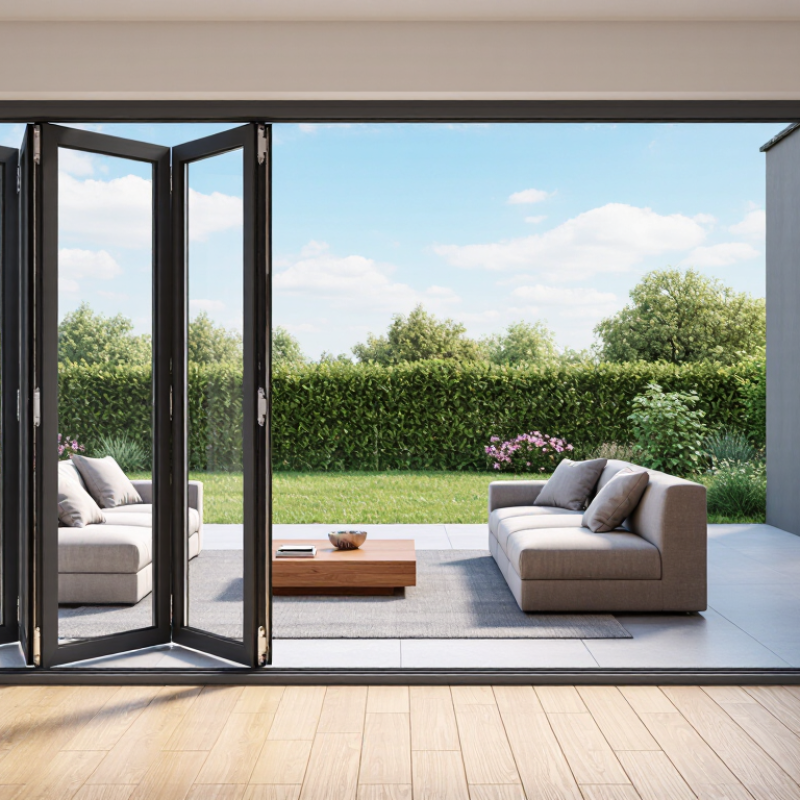
China Top 10 Folding Patio Door Suppliers?

What Are Folding Patio Doors and How Do They Work?

Folding patio doors, also called bi-fold doors, connect indoor rooms with patios through several hinged panels. Each panel folds against the next one instead of sliding behind a wall. This design can create a wide opening, often with only a slim frame at the sides.

A top-hung system carries most panel weight on an upper track. Bottom-rolling systems use rollers inside a lower track and may suit heavier glass panels. Hinges guide the folding movement, while locking points pull the panels tightly together. Weather seals help reduce drafts, rain, and outdoor noise. The frame usually uses aluminum, treated timber, or composite materials. Glass selection also matters. Double glazing improves insulation, while laminated glass can improve safety and sound control.

During site inspections, I check whether the track stays level across the full opening. A small installation error can make the panels drag or stop folding smoothly. The floor must support drainage and resist water buildup. This detail is sometimes overlooked. I also test the door repeatedly, because a system that feels smooth once may become stiff after dust enters the rollers. No folding door is completely maintenance-free. Hinges, tracks, seals, and drainage channels need regular cleaning and adjustment. Supplier quality should therefore include accurate fabrication, tested hardware, clear installation guidance, and responsive after-sales support. Availability alone does not prove reliability.
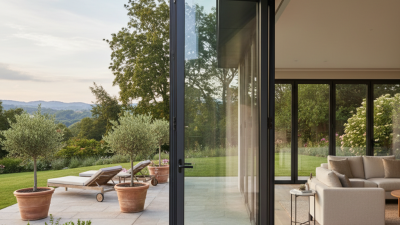
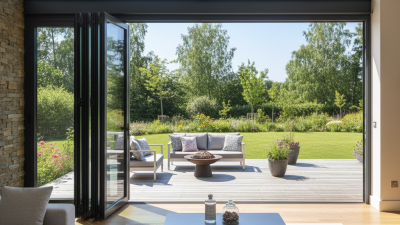
Folding Patio Doors: Nominal Opening Width by Panel Count

Folding patio doors operate by connecting multiple hinged panels that fold and stack to one or both sides of the opening. This chart uses a 900 mm nominal panel width to show the approximate total frame width as the number of panels increases. Actual dimensions vary by supplier, frame design, hardware, and required clearances.

Why Choose Chinese Folding Patio Door Suppliers?

China’s folding patio door suppliers attract global buyers through scale, flexible production, and practical customization. Many factories combine aluminum profiles, insulated glass, rollers, locks, and weather seals within one supply chain. This can reduce coordination problems and shorten development time.

Experienced suppliers usually support custom panel widths, frame colors, opening directions, and thermal specifications. They can also prepare samples before mass production. Ask for documented tests covering air leakage, water resistance, wind pressure, and repeated opening cycles. Testing should match the destination market’s building requirements, not only a factory’s internal checklist. That detail matters.

Cost is another reason buyers compare Chinese manufacturers. Large production capacity can create competitive pricing, especially for villas, hotels, and multi-unit developments. However, a low quotation may hide thinner profiles, weaker hardware, or limited after-sales support. No supplier is perfect. A careful buyer should review material certificates, inspection records, packaging methods, and replacement procedures. Factory audits, video inspections, and third-party quality checks add useful protection. Communication can still be uneven, and customized designs may extend lead times. Clear drawings, approved samples, and written tolerances prevent many avoidable disputes. Reliable suppliers explain limitations instead of promising everything. That is often a better sign than an impressive catalog.

How to Evaluate China’s Top 10 Folding Patio Door Suppliers?

Evaluating China’s top 10 folding patio door suppliers requires more than comparing online catalogs. Check how long each factory has produced folding systems, and ask for verifiable project references. A serious supplier should provide company registration details, production photos, and current product certificates. Do not rely on copied laboratory reports. Confirm that the report matches the exact profile, glass, hardware, and configuration you plan to order.

Request a working sample, not only a brochure. Open and close the panels repeatedly. Notice whether the rollers move smoothly, the panels align, and the locks engage without force. Examine corner joints, drainage channels, gaskets, and powder-coated surfaces. Ask for air, water, wind-load, thermal, and acoustic test data where relevant. The numbers matter, but testing conditions matter too. A high rating may not reflect your building’s exposure or installation method.

Compare detailed quotations line by line. Include glass thickness, aluminum alloy, finish, hardware grade, packaging, lead time, spare parts, and warranty coverage. Ask who handles adjustments after delivery. Contact previous customers and request comments about communication, defects, and replacement speed. Factory visits can reveal storage problems or inconsistent assembly. One practical mistake is judging suppliers only by the lowest price. I have seen cheaper hardware create alignment issues later. Still, expensive pricing proves nothing by itself. Require written answers, inspect samples carefully, and leave room for uncertainty before selecting a supplier.

China Top 10 Folding Patio Door Suppliers? — How to Evaluate China’s Top 10 Folding Patio Door Suppliers?
Supplier Reference Typical Export Focus Door System Common Configuration Typical Maximum Sash Width Typical Thermal Performance Performance Evidence to Request Typical MOQ Typical Production Lead Time Customization Capability Warranty Practice Evaluation Score
Supplier 01 North America, Australia, Southeast Asia Thermally broken aluminum folding door 3–8 panels, inward or outward opening 900–1,200 mm U-value commonly quoted from 1.6–2.4 W/m²K Project-specific thermal calculation, air and water test reports 1 complete set 25–40 days High 5 years for profiles; hardware terms vary 88/100
Supplier 02 Europe, Middle East, Africa Lift-and-slide compatible folding system 4–10 panels, flexible stacking direction 800–1,100 mm U-value commonly quoted from 1.7–2.6 W/m²K System test report, gasket specification, drainage details 1 complete set 30–45 days High 5 years for frame; 2 years for moving parts 86/100
Supplier 03 United States, Canada, Latin America Heavy-duty aluminum bifold door 2–8 panels, large opening applications 900–1,300 mm U-value commonly quoted from 1.8–2.8 W/m²K Structural calculations, wind-load data, corner-joint details 1–2 sets 30–50 days High 5 years for main structure 85/100
Supplier 04 Australia, New Zealand, Pacific markets Residential thermally broken folding door 3–7 panels, low-threshold option available 750–1,000 mm U-value commonly quoted from 1.9–2.7 W/m²K Water drainage test, threshold detail, glass specification 1 complete set 25–40 days Medium–High 5 years for profiles; hardware exclusions apply 83/100
Supplier 05 Middle East, Africa, South Asia Non-thermal and thermal aluminum folding systems 2–6 panels, standard and oversized options 700–1,100 mm U-value commonly quoted from 2.0–3.1 W/m²K Profile drawings, coating specification, hardware load rating 1 complete set 20–35 days Medium 3–5 years depending on component 80/100
Supplier 06 Europe, Central Asia, North Africa High-insulation aluminum bifold system 3–8 panels, double- or triple-glazing options 800–1,100 mm U-value commonly quoted from 1.4–2.2 W/m²K Independent thermal test, CE-related documentation, glass data 2–5 sets 35–55 days High 5 years for system; finish warranty varies 89/100
Supplier 07 North America, Southeast Asia, Caribbean Impact-resistant folding patio door 3–6 panels, reinforced glazing options 750–1,000 mm U-value commonly quoted from 1.8–2.9 W/m²K Impact rating, wind-load report, laminated glass certification 1–2 sets 35–60 days Medium–High 5 years for frame; project terms vary 87/100
Supplier 08 Domestic projects and private-label export Standard aluminum folding patio door 2–6 panels, common residential sizes 650–900 mm U-value commonly quoted from 2.2–3.4 W/m²K Material certificate, coating report, sample assembly inspection 1 complete set 20–35 days Medium 3 years for frame and finish 76/100
Supplier 09 Latin America, Africa, Southeast Asia Cost-focused aluminum folding door 2–5 panels, standard glazing configurations 650–850 mm U-value commonly quoted from 2.4–3.6 W/m²K Profile thickness, roller specification, weather-seal test 1 complete set 20–30 days Medium 2–3 years depending on component 73/100
Supplier 10 Custom residential and commercial export projects Large-span aluminum folding door 4–12 panels, corner-opening layouts available 900–1,400 mm U-value commonly quoted from 1.8–2.8 W/m²K Structural report, hardware cycle test, installation manual 1 project order 40–60 days Very High 5 years for frame; hardware subject to service terms 84/100

Evaluation criteria include system engineering, documented performance, customization, minimum order flexibility, lead time, after-sales support, and warranty coverage. Thermal values, dimensions, delivery schedules, certifications, and warranty terms are quotation- and project-dependent and should be verified with current technical documents before purchase.

What Products and Services Do Leading Suppliers Offer?

When buyers compare China’s top folding patio door suppliers, the product list is only the beginning. Leading factories usually provide thermally broken aluminum frames, insulated low-E glass, stainless-steel rollers, multi-point locks, screens, and powder-coated finishes. Some also prepare shop drawings, CAD files, color samples, and installation manuals. Custom sizing is common for wide openings and coastal projects. Details matter.

The IEA’s 2023 Global Status Report says buildings consume about 30% of global final energy. Therefore, capable suppliers should explain thermal values, glass specifications, drainage design, and wind-load performance, not simply advertise attractive frames.

Services often include site-measurement guidance, sample assembly, production inspection, export packing, installation training, and replacement hardware. The U.S. Department of Energy reports that windows can represent 25%–30% of residential heating and cooling energy use. Folding doors are not identical to windows, but their large glazed areas deserve similar attention.

A low U-value can still disappoint when installation is incomplete. That gap matters.

Ask suppliers for test reports, section drawings, water-penetration results, and clear warranty terms. Some provide responsive technical support; others answer slowly after payment. That is an uncomfortable difference. Buyers should also check roller adjustment procedures, spare-part availability, and whether the proposed system fits the project’s local climate and building requirements.

How to Select the Right Chinese Supplier for Your Project?

Selecting among China’s top ten folding patio door suppliers requires more than comparing catalogs. In my sourcing experience, the strongest supplier proves process control before discussing price. Ask for extrusion alloy, wall thickness, hardware cycle testing, drainage drawings, and installation tolerances. The 2024 China Building Energy Conservation Association report emphasizes building-envelope performance as a practical energy-saving measure. The U.S. Department of Energy reports that windows can account for 25%–30% of residential heating and cooling energy use. These figures make air leakage, glass specification, and thermal breaks commercial issues. Request tested U-values, solar heat gain coefficients, and air-infiltration results for the exact door configuration.

Tips: Ask for samples from the same production line. Check corner joints, rollers, seals, and locking points by hand. Require independent laboratory reports, not only factory claims. Confirm whether test results apply to the complete assembled door. A beautiful sample can hide poor installation details.

Evaluate export experience, packaging methods, replacement-part policies, and technical communication. Request a video factory audit, then verify machinery and quality records during a live call. A low quotation may exclude screens, reinforced frames, drainage accessories, or local installation support. That is where budgets often break. Grand View Research’s building-products studies identify energy efficiency and renovation demand as continuing market drivers, but market growth does not guarantee supplier reliability. I would score each supplier against your climate, opening size, wind exposure, and service expectations. My own judgment can still be imperfect; a second technical review is worth the delay.