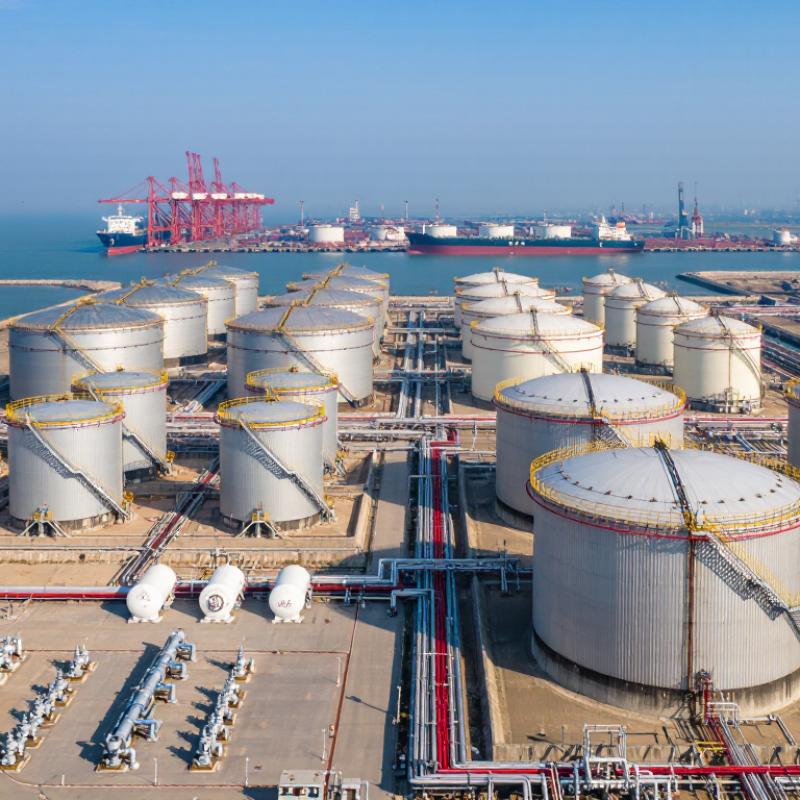
Oil storage tanks quietly support refineries, ports, emergency reserves, and global fuel distribution. Their scale is easy to underestimate. A single terminal may hold millions of barrels, connected by pipelines, pumps, loading arms, and fire-protection systems. The International Energy Agency’s Oil 2024 report expects global oil demand to approach 104 million barrels per day by 2026. This demand keeps storage capacity strategically important, even as renewable energy changes the market.
Choosing an Oil Storage Tank Manufacturer requires more than comparing steel prices. API 650 compliance, welding quality, corrosion protection, seismic design, inspection records, and lifecycle support all matter. The U.S. Energy Information Administration also tracks substantial petroleum storage across OECD economies, showing why reliability remains a commercial and national priority. Peter Davidson, a recognized tank-storage industry expert, has stated, “Storage is a critical part of the energy supply chain.” That point deserves practical attention.
This ranking examines ten leading manufacturers worldwide. It considers project experience, engineering depth, fabrication capacity, safety systems, customization, and after-sales service. Company size alone is not enough. A large supplier may still struggle with remote commissioning or replacement parts. A smaller specialist may deliver better technical communication. That assumption can fail, too. Public company data is uneven, and supplier claims require verification. The comparison therefore focuses on evidence, not polished brochures. Readers should still confirm certifications, local standards, warranty terms, and independent inspection requirements before selecting a partner. A tank may look simple. Its consequences are not.
A leading oil storage tank manufacturer offers more than steel, welding, and attractive delivery dates. It understands product characteristics, soil conditions, wind loads, temperature changes, and fire risks. The design should follow recognized requirements, such as API 650 for welded tanks and API 653 for inspection and maintenance. Material certificates, weld procedures, non-destructive testing, and coating records must remain traceable. These details often separate dependable engineering from a polished brochure.
Market pressure also matters. The International Energy Agency’s Oil 2024 report estimated global oil demand at about 103 million barrels per day in 2024. That volume requires storage systems with reliable availability, safe operation, and practical maintenance access. A serious manufacturer should provide floating-roof solutions, vapor-control planning, leak detection, and corrosion monitoring when appropriate. It should also explain limitations clearly. No tank performs perfectly in every climate. That point is easy to overlook.
Tips: Ask for inspection records, material traceability, and similar project references. Check whether the supplier supports API 653 inspections after commissioning. Review the full lifecycle cost, not only the purchase price. A cheaper coating may fail earlier in a humid coastal environment. Also, test emergency procedures with operators before the tank is filled. Industry reports can guide decisions, but site data should have the final voice. Mistakes still happen, especially when documentation is treated as paperwork instead of protection.
Top 10 Oil Storage Tank Manufacturers Worldwide?
How Oil Storage Tanks Are Designed, Built, and Certified
Oil storage tanks begin with the product, volume, temperature, and site conditions. Engineers assess soil strength, wind exposure, seismic risk, corrosion, and required operating pressure. Most atmospheric tanks use welded steel plates, while smaller units may use bolted construction. Geometry matters. A floating roof can reduce vapor space and product loss. A fixed roof offers simpler maintenance but needs careful venting.
Fabrication follows approved drawings, material certificates, welding procedures, and trained inspection personnel. Plates are cut, rolled, aligned, and welded under controlled conditions. Inspectors examine welds visually and with non-destructive testing, including ultrasonic or radiographic methods. Every nozzle, ladder, stairway, and drain deserves attention. Small alignment errors can become serious stress points later. Experience helps here, but experience alone is not enough.
Certification confirms that the tank meets its specified design code and project requirements. Common references include API 650 for welded aboveground tanks, API 653 for in-service inspection, and recognized pressure and fire-safety standards where applicable. Independent inspectors may review calculations, welding records, coating thickness, hydrostatic testing, and final documentation. The process is demanding. Still, no design is flawless. Corrosion under insulation, settlement, and poor drainage can remain hidden after delivery. Reliable manufacturers therefore provide inspection plans, traceable records, maintenance guidance, and realistic limits for operation. A polished certificate cannot replace disciplined field checks.
An anonymized comparison of common large-scale manufacturer capability profiles. The specifications below represent established industry practices and typical project ranges; final values depend on the applicable code, site conditions, product properties, and owner requirements.
| Profile | Typical Manufacturing Scope | Common Tank Types | Indicative Capacity Range | Principal Design Standards | Construction and Welding Practices | Corrosion Protection | Inspection and Testing | Typical Applications |
|---|---|---|---|---|---|---|---|---|
| 01 | Large engineered-tank manufacturer serving crude-oil terminals and refinery projects | Fixed-roof tanks External floating-roof tanks | 10,000–160,000 m³ per tank; project-specific | API 650 for welded atmospheric tanks; API 653 for in-service inspection; local fire and environmental regulations | Shop-fabricated shell plates and site welding; qualified procedures and welders; dimensional control during erection | Internal lining selected for crude or refined products; external coating systems; cathodic protection where required | Visual inspection, weld NDE, hydrostatic testing, settlement surveys, roof and floating-seal checks | Crude-oil storage, refinery feedstock, export terminals |
| 02 | Fabricator specializing in medium and large aboveground petroleum tanks | Cone-roof tanks Internal floating-roof tanks | 1,000–80,000 m³ per tank | API 650, EN 14015, or equivalent national pressureless-tank standard | Automated or semi-automated welding may be used for long seams; welding qualification normally follows applicable construction-code requirements | External paint systems, solvent-free linings, tank-bottom corrosion monitoring, and leak-detection measures | Radiographic or ultrasonic examination where specified; vacuum-box testing for floor seams; hydrotest and gauging checks | Diesel, gasoline, kerosene, lubricants, and intermediate petroleum products |
| 03 | Specialist in low-temperature and refrigerated hydrocarbon storage systems | Double-wall tanks Insulated tanks Low-temperature tanks | 5,000–200,000 m³, depending on product and temperature | API 620 for large welded low-pressure tanks; API 650 where atmospheric design is applicable; project-specific cryogenic requirements | Materials are selected for design temperature; heat input, preheating, and post-weld controls are governed by the qualified welding procedure | Insulation systems, vapor barriers, secondary containment, and low-temperature-compatible coatings | Material verification, weld NDE, leak testing, pressure or vacuum checks, settlement monitoring, and commissioning tests | Refrigerated hydrocarbons, low-temperature petroleum products, and specialty feedstocks |
| 04 | Regional manufacturer focused on modular and transportable tank systems | Bolted tanks Welded tanks Field-assembled tanks | 50–10,000 m³ per tank | API 650, API 12F, UL 142, or applicable national standards, depending on configuration and jurisdiction | Factory-built panels or shell sections reduce site work; bolted systems use engineered gaskets, torque control, and joint inspection | Glass-fused, epoxy, polyurethane, or other product-compatible systems; exterior protection depends on exposure conditions | Factory dimensional checks, coating inspection, joint inspection, leak testing, and site acceptance testing | Fuel depots, agricultural fuel storage, remote facilities, and temporary operations |
| 05 | Manufacturer providing tank packages for fuel distribution and service stations | Horizontal tanks Vertical tanks Double-wall tanks | 5–500 m³ per tank; larger systems may be engineered as project packages | UL 142 or equivalent aboveground-storage requirements; local fire codes and environmental rules | Factory-applied coatings, interstitial leak monitoring for double-wall construction, and compatible internal lining when needed | Factory pressure or leak tests, coating-thickness checks, nozzle inspection, and documentation review | Retail fuels, fleet fueling, emergency generators, and commercial diesel storage | |
| 06 | Heavy industrial fabricator serving petrochemical and chemical-processing sites | Cone-roof tanks Internal floating-roof tanks Specialty process tanks | 500–50,000 m³ per tank | API 650, API 620, EN 14015, and client engineering specifications as applicable | High-integrity nozzle fabrication, controlled fit-up, qualified welding procedures, and traceable plate and consumable records | Product-specific linings, corrosion allowances, external coating systems, and secondary containment design | Ultrasonic or radiographic examination, magnetic-particle or dye-penetrant testing, hydrotest, and dimensional inspection | Base oils, chemicals, additives, blending components, and process intermediates |
| 07 | Manufacturer experienced in marine terminal and coastal storage projects | Floating-roof tanks Fixed-roof tanks Bunded tank systems | 20,000–180,000 m³ per tank | API 650 and API 653; NFPA 30 and local marine-terminal requirements where applicable | Wind, seismic, settlement, and roof-drainage conditions are incorporated into the design; site welding is supported by inspection plans | High-performance marine coating systems, bottom corrosion controls, roof-seal protection, and stormwater management | Hydrostatic testing, foundation and settlement monitoring, roof-drain tests, NDE, and fire-protection interface checks | Import and export terminals, blending terminals, and strategic petroleum reserves |
| 08 | Manufacturer specializing in stainless-steel and high-cleanliness storage equipment | Stainless tanks Lined carbon-steel tanks Vertical process tanks | 10–10,000 m³ per tank | API 650, EN 14015, ASME Section IX welding qualifications, and product-specific hygienic or process requirements | Low-contamination fabrication, controlled stainless-steel welding, passivation where specified, and segregation of carbon and stainless materials | Stainless construction, glass-flake lining, rubber lining, or other chemically compatible systems | Weld visual inspection, dye-penetrant testing, lining holiday testing, hydrotest, and cleanliness verification | Specialty oils, additives, chemical feedstocks, and corrosion-sensitive products |
| 09 | Manufacturer delivering small and medium tanks for industrial and commercial facilities | Shop-welded tanks Horizontal cylindrical tanks Rectangular tanks | 1–1,000 m³ per tank | UL 142, API 650, EN 12285, or applicable regional fabrication standards | Factory welding, standardized nozzle arrangements, documented weld procedures, and controlled assembly conditions | Powder coating, liquid paint, galvanic protection, or internal lining based on stored product and exposure | Dimensional inspection, weld examination, leak testing, coating checks, and nameplate or documentation verification | Workshops, transport fleets, backup power, equipment fuel, and industrial lubricants |
| 10 | Integrated engineering, procurement, construction, and maintenance provider for storage terminals | Multi-tank farms Floating-roof tanks Double-containment systems | Multi-tank projects from 10,000 to more than 500,000 m³ total site capacity | API 650, API 653, API 2350 for overfill prevention, NFPA 30, and applicable environmental regulations | Turnkey execution may include foundation design, plate erection, piping integration, instrumentation, and commissioning | Bunds or dikes, secondary containment liners, internal and external coatings, cathodic protection, and leak monitoring | Inspection and test plans, NDE, hydrotesting, overfill-protection testing, instrument calibration, and handover dossiers | Oil terminals, pipeline hubs, refinery storage farms, and large distribution centers |

Choosing the top 10 oil storage tank manufacturers worldwide requires more than counting production capacity. A reliable comparison examines design experience, welding control, material traceability, and field service. Manufacturers serving refineries, terminals, and energy distributors should demonstrate practical knowledge of fixed-roof, floating-roof, and pressure-rated tanks. Their engineering teams should understand API 650, API 620, fire protection, corrosion allowance, and local permitting requirements. Factory audits can reveal more than polished brochures. Inspect plate mill certificates, weld maps, coating records, and hydrostatic test reports. Ask how the supplier handled a leaking nozzle or delayed foundation. Real answers matter.
Among the strongest candidates, ten manufacturers usually stand out through documented projects, stable quality systems, and responsive after-sales support. However, global reach does not guarantee equal performance at every site. Soil conditions, temperature swings, seismic exposure, and marine humidity can change the best choice. A tank that performs well in a desert may struggle beside a salty coastline. Procurement teams should compare lifecycle cost, not only the quoted steel price. Spare parts, inspection access, roof drainage, and future cleaning deserve attention. No ranking is perfect. Project data may be incomplete, and published capacity can be difficult to verify. Buyers should request current references, independent inspection records, and realistic delivery schedules before signing a contract.
Comparing Oil Storage Tank Manufacturers Worldwide
The strongest manufacturers are not judged by capacity alone. Tank type must match fluid properties, site conditions, and operating pressure. Fixed-roof tanks suit many low-volatility products, while internal or external floating roofs reduce vapor losses.
According to the U.S. Environmental Protection Agency, floating roofs can significantly lower volatile emissions when properly sealed and maintained. Small details matter.
Material selection changes service life. Carbon steel remains common for large atmospheric tanks because it balances strength and cost. Stainless steel supports more corrosive applications, while aluminum roofs reduce structural weight.
API 650 covers welded tanks for atmospheric service, and API 620 addresses large, low-pressure designs. These standards help buyers compare engineering quality rather than attractive brochures.
Technology separates ordinary suppliers from capable partners. Radar level gauges, overfill alarms, vapor recovery, cathodic protection, and continuous leak detection improve operational control.
The International Energy Agency’s Oil 2024 report expects global oil demand to reach about 105.4 million barrels per day by 2030, increasing pressure on storage reliability.
Manufacturers should also provide foundation studies, welding inspection, non-destructive testing, commissioning, and maintenance training. Service quality is often harder to measure. I would examine inspection records, repair response times, coating specifications, and lifecycle costs before selecting among the top ten. A cheaper tank can become expensive after one unnoticed settlement problem.
How to Choose the Right Oil Storage Tank Manufacturer
The “Top 10” label can attract attention, but it should not decide your purchase. The IEA Oil 2024 report forecasts global oil demand will reach 105.4 million barrels per day by 2030. Your selected manufacturer must therefore support practical expansion, not only today’s storage volume. Ask for verified production capacity, previous project references, material certificates, and documented quality procedures.
Technical compliance matters. Tanks should match recognized requirements such as API 650 for welded storage tanks and API 653 for inspection and maintenance. Confirm design pressure, corrosion allowance, foundation loading, floating-roof performance, and leak-detection provisions. EIA storage surveys distinguish shell capacity from working capacity, a useful reminder that advertised volume may not equal usable volume. Check the operating figure carefully.
Site experience often separates a safe project from an expensive correction. Review welding qualifications, non-destructive testing records, coating systems, and commissioning procedures. Ask how the manufacturer manages temperature changes, settlement, rainwater, and product contamination. A detailed factory inspection can reveal more than a polished website. Sometimes, a smaller supplier offers stronger supervision. Sometimes, it lacks long-term service depth. That trade-off deserves honest scrutiny. I would also compare spare-part availability and inspection support over the tank’s expected life, not just the initial quotation.
Tank capacity and structural design vary according to the stored product, operating pressure, vapor-control requirements, site conditions, and applicable standards such as API 650 or EN 14015. These indicative capacity ranges help buyers compare suitable tank categories before evaluating fabrication quality, certification, lead time, installation support, and lifecycle cost.
Get the latest news straight from us on all our new products, features, services, and much more!