Who Are the Top Prefab House Manufacturers in China?
Choosing among China’s leading Prefab House manufacturers takes more than comparing glossy renderings. A smart buyer looks inside the factory process. How are wall panels joined? What finishes can withstand repeated handling? Can the supplier explain transport limits before a truck arrives? Small details matter.
Modular-construction researcher Dr. Ryan E. Smith studies how off-site building connects design, factory production, and site installation. A concise summary of that perspective is: “A factory-built home succeeds when design, production, delivery, and installation work as one system.” This is a paraphrase, not a verbatim quotation. It offers a useful lens for comparing manufacturers, whose capabilities can vary by project and product line.
This guide examines manufacturers through practical signals: documented quality controls, clear specifications, production capacity, customization options, and after-sales support. Ask for project references and inspect sample finishes, not just digital images. Check who handles foundations, utility connections, shipping, and installation; these boundaries can shape the final cost. No single ranking fits every buyer. A compact resort cabin has different needs from a multi-unit workforce project. The shortlist should match your site, climate, budget, and delivery schedule. Real projects are rarely perfect. The useful question is how clearly a manufacturer identifies risks—and responds when plans change.
What Counts as a Prefab House in China: Modular, Steel, and Concrete Systems
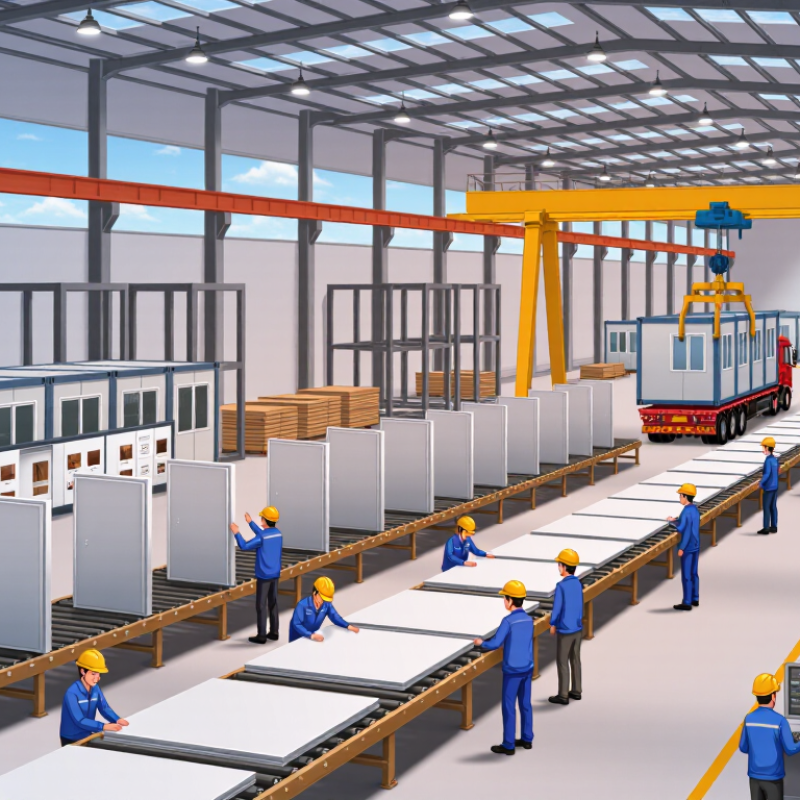
In China, “prefab house” describes a construction method, not one material. A system qualifies when significant components are made off-site and assembled on-site. Modular buildings arrive as room-sized units, often with walls, floors, and services already installed. Steel systems use factory-cut frames and panels; concrete systems use precast walls, slabs, or structural components. A steel frame alone does not make a house fully modular.
The distinction matters. McKinsey’s 2019 report, Modular Construction: From Projects to Products, found that modular methods can shorten construction schedules by 20–50% in suitable projects. That is potential, not a guaranteed result: transport limits, crane access, design changes, and site connections all affect delivery. China’s construction sector also has a large environmental footprint. The 2023 Global Status Report for Buildings and Construction estimated that buildings and construction accounted for 37% of global energy- and process-related CO₂ emissions in 2022. Prefabrication may reduce material waste, but the outcome depends on design, factory energy, and transport distance. The boundary is not always neat; buyers should check what is factory-made, what arrives on trucks, and what still needs finishing on site.
China’s 2020 Policy Set a 15% Target for Prefabricated Buildings
China’s 2020 prefabrication target gave the building sector a clear measure: prefabricated construction should make up 15% of new building activity. The target encouraged developers to consider factory-made components earlier, during design and budgeting. It also pushed suppliers to improve production capacity, quality checks, and delivery planning.
A policy target is not a guarantee of good housing. Buyers and project teams still need to examine how panels, joints, insulation, and plumbing are assembled. A factory may produce walls with consistent dimensions, but poor transport or rushed installation can cause delays and costly adjustments. Small details matter. Ask for documented inspection procedures, realistic delivery schedules, and examples of completed projects. These checks can reveal more than a polished showroom.
For prefab house manufacturers, the 15% goal increased pressure to provide reliable systems, not just fast production. Clear drawings, traceable material records, and trained site crews help connect factory work with on-site results. Regional weather also matters: a design suitable for a mild coastal location may need different insulation and moisture protection elsewhere. The target was useful, but it did not make every project efficient. That distinction is easy to overlook when comparing quotations.
China’s 2020 Prefabricated Building Targets
Policy targets varied by regional promotion category; the 15% benchmark applied to actively promoted areas.
The targets represent the minimum share of newly constructed building floor area. Source: State Council General Office, Guiding Opinions on Vigorously Developing Prefabricated Buildings (2016).
Leading Chinese Manufacturers: Broad Homes, CIMC Modular, and CSCEC
China’s leading prefab-house manufacturers tend to bring different strengths to a project. Some focus on complete residential developments, coordinating factory production with site installation. Others specialize in modular units for offices, worker accommodation, or public facilities. Large construction groups can connect these systems with broader engineering and infrastructure work. The distinction matters. A polished showroom says little about delivery performance.
Look beyond rendered images. Ask for factory inspection records, material specifications, and references from completed projects in similar climates. Check how wall panels, insulation, and service connections meet at the corners. A neat module can still leak if joints are poorly sealed. Ask who handles transport, crane access, and on-site inspection. These details affect cost and schedule.
Strong suppliers should explain what their system can—and cannot—do. Still, comparison is difficult. Quoted prices may exclude foundations, utilities, or interior finishes, so request an itemized scope. Visit an occupied building if possible, and speak with its facilities team. Listen for recurring maintenance issues. One project is not proof of consistent quality, but it is a useful starting point.
How to Compare Suppliers: Capacity, Certifications, and Project Scale
Who Are the Top Prefab House Manufacturers in China?
How to Compare Suppliers: Capacity, Certifications, and Project Scale
A supplier’s showroom tells little about its ability to deliver 200 homes on schedule. Check factory output, active production lines, staffing, and recent delivery records. Ask for dated production schedules and shipment documents, then compare them with the proposed project timeline. McKinsey’s 2019 report, Modular Construction: From Projects to Products, says modular construction can reduce project timelines by 20–50% and costs by up to 20%. These are potential gains, not guarantees; design complexity, transport, and site readiness all matter.
Tips: Request a live video walkthrough of the workshop. Ask which production line would handle your order. Verify certificate numbers, issuing bodies, validity dates, and whether the certificate covers the actual product and factory. For export projects, confirm that relevant approvals match the destination market.
Project scale should match proven experience. A supplier who has completed small cabins may not be ready for a multi-building residential site. Review comparable projects, including unit counts, delivery phases, and defect records. Ask how changes are documented and who checks dimensions before packing. A spreadsheet can still flatter a factory. I would cross-check claims against client references and, where practical, an independent factory inspection. Don’t rely on capacity figures alone.
Which Manufacturer Fits: Housing, Worker Camps, and Commercial Projects
Prefab house manufacturers in China should be compared by project fit, not price alone. For permanent housing, check insulation, ventilation, daylight, plumbing layouts, and finish durability. Request drawings, material specifications, and examples of similar completed projects. A polished catalogue is not proof. Also clarify who handles design changes, factory checks, packing, and site assembly.
Tips: For worker camps, verify room capacity, sanitation, fire-safety features, and utility connections. For commercial projects, assess customer flow, accessible entrances, storefront openings, and options for future changes. Ask for a sample room or a walkthrough of a comparable installation. Compare delivery schedules and installation scope. Costs can shift. Get exclusions in writing.
A supplier experienced in one segment may be less suited to another. Ask who approves engineering details and how measurements are checked before production. One caveat: extensive customization can complicate schedules, even when it improves the layout. The cheapest quote may omit useful details, while the most elaborate design may exceed the site’s needs. Check local building requirements with qualified project professionals before confirming specifications.