


What Are the Top Wired Push Button Types in 2026?

Choosing the right Wired Push Button in 2026 requires more than comparing colors, prices, and product photos. Engineers now evaluate switching function, contact reliability, mounting depth, ingress protection, and long-term maintenance. A button may look suitable on a clean test bench, yet fail when dust, vibration, or repeated gloved use enters the picture.

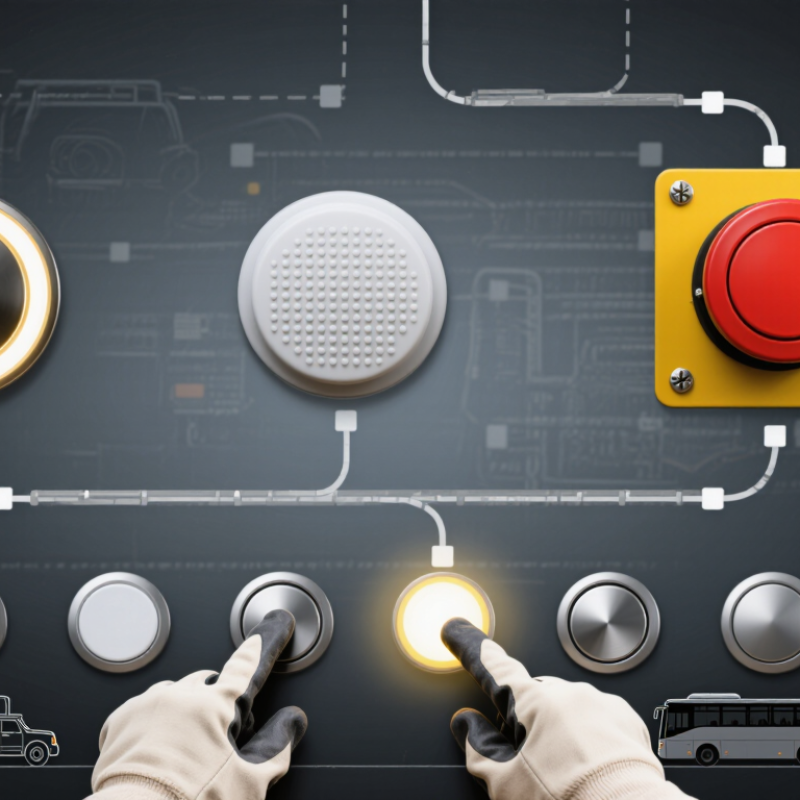
This guide examines the leading wired push button types used in control panels, machinery, transport equipment, and commercial systems. Momentary buttons suit start commands and operator inputs. Maintained buttons remain active after release, making them useful for simple mode selection. Illuminated buttons improve visibility in dim enclosures, while emergency-stop designs provide a large, unmistakable control surface. Metal push buttons often deliver stronger mechanical resistance, although plastic models can reduce cost and installation weight.

Small details matter.

During practical selection, technicians should check terminal labeling, wire compatibility, rated current, actuator travel, and panel cutout dimensions. A 22 mm hole may not fit every supplier’s hardware. That mistake is surprisingly common. Product claims also deserve careful review; published ratings may depend on specific loads, wiring methods, and environmental conditions. Reliable decisions should reference manufacturer datasheets, recognized testing requirements, and real operating conditions.

The “top” type is not universal. It depends on the task, enclosure, user, and expected service life. This comparison highlights the strengths, limitations, and suitable applications of each option, while acknowledging one uncomfortable truth: the cheapest button can become the most expensive component after installation.
What Are the Top Wired Push Button Types in 2026?

Momentary Push Buttons: Up to 10 Million Operations in Industrial Ratings

What Are the Top Wired Push Button Types in 2026?

Momentary push buttons remain practical choices for industrial control panels, machine stations, and emergency interfaces. They activate a circuit only while pressed, then return when released. This simple action reduces accidental continuous operation during testing and maintenance.

Some industrial-rated models support up to 10 million operations. That figure is not automatic. It depends on contact load, switching frequency, enclosure quality, and installation conditions. A button controlling a small signal may last longer than one switching a demanding load directly. Use a suitable relay when current exceeds the button’s rated capacity.

In a dusty workshop, I would check the sealing level before choosing a high-cycle design. Fine particles can collect around the actuator and change its feel. Moisture creates another risk. A sealed front can help, but the rear wiring still needs protection. Small details matter.

Operators also need clear tactile feedback. A firm click helps workers confirm activation through gloves. Wide actuators can improve access, but they may invite accidental presses. Guarded versions provide better protection near moving equipment. Contact bounce can affect sensors and controllers, so testing the connected system remains necessary.

I have seen installation errors shorten service life. Loose terminals, incorrect wire stripping, and excessive panel force are common examples. The advertised cycle count should guide selection, not replace inspection. Record actual usage, temperature, and failures during trials. Real conditions often challenge the datasheet.

What Are the Top Wired Push Button Types in 2026?

Typical maximum mechanical operation ratings for common industrial wired push button types

Momentary push buttons lead this comparison with industrial ratings of up to 10 million operations. Actual service life depends on contact load, switching frequency, environmental conditions, and whether the rating refers to mechanical or electrical operations.

Maintained Push Buttons: Two-State Switching Under IEC 60947-5-1

What Are the Top Wired Push Button Types in 2026?

Maintained push buttons provide two-state switching for wired control panels. Press once, and the contact remains in its selected position. Press again, and it returns to the alternate state. This latching action suits power selection, mode control, reset authorization, and equipment isolation interfaces.

Under IEC 60947-5-1, engineers evaluate control circuit devices through defined electrical and mechanical requirements. The standard does not make every maintained button suitable for every application. Check the rated operational voltage, current, utilization category, insulation properties, and terminal arrangement. A normally open contact can close during actuation, while a normally closed contact can open. Small details matter.

In practical installations, a clear actuator position reduces operator mistakes. Use contrasting markings, firm panel mounting, and wire labels that remain readable after maintenance.

Contact materials and switching loads also influence reliability, especially with low-current signals or inductive loads. A button that feels solid may still perform poorly if its circuit rating is mismatched. That is easy to overlook.

Experienced technicians also test both states after wiring. They confirm continuity, release behavior, and the absence of unwanted contact bounce. Environmental factors deserve attention too. Dust, vibration, moisture, and repeated operation can change performance over time. Maintained buttons are simple, but not careless devices. Their two-state action demands deliberate circuit design and honest inspection records.

Emergency-Stop Buttons: ISO 13850 and IEC 60947-5-5 Compliance

In 2026, wired emergency-stop buttons remain vital in machinery control panels. A red mushroom actuator on a yellow background is easy to recognize. ISO 13850 focuses on the emergency-stop function, not appearance alone. The button should stop hazardous movement quickly, remain engaged, and prevent unexpected restarting.

Common release types include twist-release, pull-release, and key-release designs. Twist-release suits many factory panels. Key-release can restrict reset access. Pull-release is simple, but accidental activation may be more likely in crowded work areas. The correct choice depends on access, risk, and operator movement. Small details matter.

IEC 60947-5-5 addresses emergency-stop devices with mechanical latching functions. A compliant device should maintain its stopped position after activation. Its contacts should change reliably and resist unintended release. Direct-opening action is important where contact welding could create danger. However, the button alone does not create compliance.

Wiring, safety relays, contactors, monitoring, and reset logic must work together. A technician should test the circuit under realistic fault conditions, including broken wires and welded contacts. That step is often rushed.

Resetting must require a deliberate local action. Restarting should happen only through a separate command. Standards editions and regional requirements can change, so engineers should verify the applicable text before approval. Even experienced teams sometimes treat a familiar button as a complete safety solution. It is not.

Illuminated Push Buttons: 24 VDC Control and IP65 Protection

Illuminated push buttons remain a practical wired control choice in 2026. A 24 VDC circuit suits many machines, control panels, and low-voltage automation systems. The light gives immediate status feedback, even in dim workshops.

Choose momentary buttons for start or jog commands. Select maintained buttons when the position must remain visible. Match the contact rating to the connected load, not only the supply voltage. LED polarity also matters on many models. Check the datasheet.

IP65 protection means the front can resist dust and low-pressure water jets. It does not mean immersion or careless cable routing. Use a suitable enclosure, sealed mounting hardware, and correctly tightened cable entries. Inspect the gasket during installation. Small gaps can defeat good protection.

A clear lens helps, but brightness should suit the surrounding light. Excessive glare can make status readings harder. The circuit should also include proper fusing and a reliable 0 VDC return. A 24 VDC supply is convenient, not automatically risk-free. Keep it simple.

In field inspections, loose terminals often cause more trouble than the button itself. Vibration, oil residue, and repeated pressing deserve attention. I would not select IP65 from a catalog line alone. Testing the installed assembly is wiser, although many projects skip this step. That shortcut may look efficient, but it weakens reliability.

Heavy-Duty Push Buttons: NEMA 4X and IK08 Enclosure Ratings

In 2026, wired push buttons remain practical for machines, panels, and outdoor control stations. Heavy-duty models matter most where dust, water, and impact are routine. A NEMA 4X enclosure resists hose-directed water, airborne dust, and corrosion. That makes it suitable for washdown areas, coastal sites, and exposed processing equipment.

IK08 adds mechanical protection against impacts up to 5 joules under IEC 62262 testing. A dropped tool may not destroy the button or crack its housing. Still, IK08 is not indestructible. Repeated strikes, poor mounting, or a damaged cover can reduce protection. Check the complete assembly, not only the switch body.

Look closely at the cable entry. A sealed gland should grip the cable firmly without sharp bending. Operators wearing wet gloves also need a button with clear travel and a textured actuator. In field inspections, condensation is often overlooked. It can enter through loose fittings, even when the enclosure rating looks impressive. One assumption needs challenging: NEMA 4X and IK08 do not guarantee long service in every environment. Temperature, chemicals, ultraviolet exposure, and installation quality still matter. Select compatible contacts, inspect seals regularly, and verify the rating after panel modifications.

What Are the Top Wired Push Button Types in 2026? - Heavy-Duty Push Buttons: NEMA 4X and IK08 Enclosure Ratings
Wired Push Button Type Operating Action Typical Contact Arrangement Reset or Switching Method Heavy-Duty Enclosure Rating Impact Protection Common Mounting Size Typical Application Key Selection Consideration
Momentary Push Button The circuit changes state only while the actuator is pressed. Normally open (NO), normally closed (NC), or one NO plus one NC contact block. Spring return after the actuator is released. NEMA 4X enclosure options available; suitable designs provide protection against dust, water directed by hose, and corrosion. IK08 models withstand an impact energy of 5 joules in accordance with IEC 62262. Common panel cutouts include approximately 16 mm, 22 mm, and 30 mm, depending on the product design. Start, stop, jog, reset, acknowledge, and machine-control functions. Verify contact rating, actuator travel, guard design, and whether the complete assembly—not only the button head—has the required enclosure rating.
Maintained Push Button The circuit remains in its selected state after the actuator is pressed. NO, NC, or changeover contacts, depending on the contact block. Push-on/push-off or alternate-action mechanism. NEMA 4X-rated versions are used where washdown and corrosive environmental exposure are expected. IK08-rated versions provide 5-joule impact resistance when tested to IEC 62262. Frequently offered in 22 mm panel systems; other sizes are also available. Power enable, operating-mode selection, lighting control, and equipment isolation commands. Use a maintained device only where an intentional, visible state change is acceptable; consider accidental activation and lockout needs.
Emergency-Stop Push Button Pressing the large actuator initiates an emergency stop function. Usually positively opening NC contacts, often with one or more auxiliary NO contacts. Latching action; twist-release, pull-release, or key-release reset. NEMA 4X versions are available for demanding industrial and washdown environments. IK08 versions are designed to resist a 5-joule impact under IEC 62262 test conditions. 22 mm is a common industrial mounting diameter; mounting dimensions remain manufacturer-specific. Machinery emergency-stop circuits, conveyor systems, packaging equipment, and process lines. Selection should consider ISO 13850, IEC 60947-5-5, contact monitoring, reset visibility, and the required safety architecture.
Illuminated Push Button Momentary or maintained switching combined with a visual status indicator. NO, NC, or changeover contacts; the lamp or LED circuit is electrically separate or separately specified. Spring-return or maintained, depending on the actuator mechanism. NEMA 4X constructions are available with sealed lenses and suitable gasket systems. IK08 versions provide resistance to impacts up to 5 joules under IEC 62262. Common panel sizes include 16 mm and 22 mm; exact cutout dimensions must be checked before installation. Status indication, operator prompts, alarm acknowledgment, and process control. Confirm LED voltage, polarity, brightness, lens color, heat generation, and visibility under ambient lighting.
Guarded Push Button Momentary or maintained operation with a surrounding guard to reduce accidental actuation. NO, NC, or changeover contacts based on the installed contact block. Spring return or maintained switching. NEMA 4X-rated guarded assemblies are available for dusty, wet, and corrosive locations. IK08-rated designs withstand a 5-joule impact test when the complete assembly is so rated. Commonly based on 22 mm industrial control mounting systems. Start controls, reset stations, foot-traffic areas, and equipment exposed to accidental contact. Check that the guard does not obstruct access during an emergency and that the actuator remains easy to identify.
Mushroom-Head Push Button Provides a large actuator surface for rapid operation. NO, NC, or changeover contacts; emergency-stop versions commonly use NC safety contacts. Momentary spring return or latching, depending on the intended function. NEMA 4X-rated models are suitable for applications requiring sealed, corrosion-resistant construction. IK08-rated models are tested for 5-joule impact resistance according to IEC 62262. 22 mm mounting systems are widely used for industrial control panels. Large-machine controls, operator panels, emergency functions, and reset stations. Choose actuator color and shape according to the control function; emergency-stop color conventions must be followed where applicable.
Key-Reset Push Button Push operation changes the circuit state, while a key is required for reset or release. Typically NC, NO, or changeover contacts selected for the control circuit. Key-release or key-reset mechanism; may be momentary or latched. NEMA 4X enclosure options are available for controlled-access industrial applications. IK08-rated assemblies provide 5-joule impact resistance under IEC 62262 testing. Often designed for 22 mm panel mounting, with the exact key clearance specified by the assembly. Restricted reset operations, machine restart authorization, and controlled-access equipment. Define key control, spare-key management, reset visibility, and whether the reset action meets the applicable machine-safety requirements.
Piezoelectric Push Button Electronic switching is activated by pressure on a sealed solid-state surface. Electronic output such as pulse, maintained logic, or low-voltage switching interface; not normally a mechanical contact block. Configured through the connected controller or electronic interface. Sealed NEMA 4X-style or NEMA 4X-rated constructions are available, subject to the complete product specification. IK08 versions are available and correspond to 5-joule impact resistance under IEC 62262. Common panel cutouts include approximately 16 mm and 19 mm, depending on the design. Outdoor kiosks, washdown panels, public equipment, and high-cycle operator interfaces. Check supply voltage, output type, switching current, controller compatibility, and the specified operating-life rating.
Protective-Cap Push Button Momentary or maintained push operation under a hinged, flip-up, or screw-on protective cover. NO, NC, or changeover contacts. Spring return or maintained switching, with the cover reducing accidental operation. NEMA 4X configurations are available when the button, seal, cover, and mounting hardware are rated as a complete assembly. IK08 protection is available in designs tested to withstand 5 joules of impact. Commonly used with 22 mm panel cutouts; cover clearance must be included in the panel layout. Start, reset, alarm, and auxiliary controls where unintended pressing is a concern. Confirm cover opening force, access speed, chemical compatibility, and whether the cover itself affects the enclosure seal.