


lightweight golf umbrellas sit at the intersection of weather protection, portability, and on-course performance. The R&A’s Golf Around the World 2023 report recorded more than 66 million golfers worldwide. That participation creates steady demand for practical equipment beyond clubs and balls. However, major market reports rarely isolate golf umbrellas as a separate category. This gap makes product comparisons less straightforward.
Grand View Research valued the global golf equipment market at billions of dollars in recent reporting. Its analysis also points toward product innovation, convenience, and improved materials. For golfers, those trends appear in fiberglass shafts, compact canopies, ergonomic grips, and water-resistant fabrics. A lighter frame can reduce shoulder strain during long walking rounds. It can also fit beside a stand bag without stealing valuable space.
Human-factors designer Dr. Bryce Rutter offers a useful design principle: “A lighter product matters only when it remains easy to control.” That idea deserves attention here. Weight alone does not define quality. A flimsy umbrella may twist in gusts, invert quickly, or leave wet clubs exposed. That is not lightweight performance.
The best lightweight golf umbrellas balance low mass with stability, coverage, and dependable opening mechanisms. Look for reinforced ribs, a comfortable handle, and a canopy large enough for one golfer with a bag. Wind ratings should be treated cautiously, because testing methods can differ between brands. Real course experience still matters. A model that feels perfect in a showroom may become awkward after eighteen holes. That uncomfortable detail is easy to overlook.
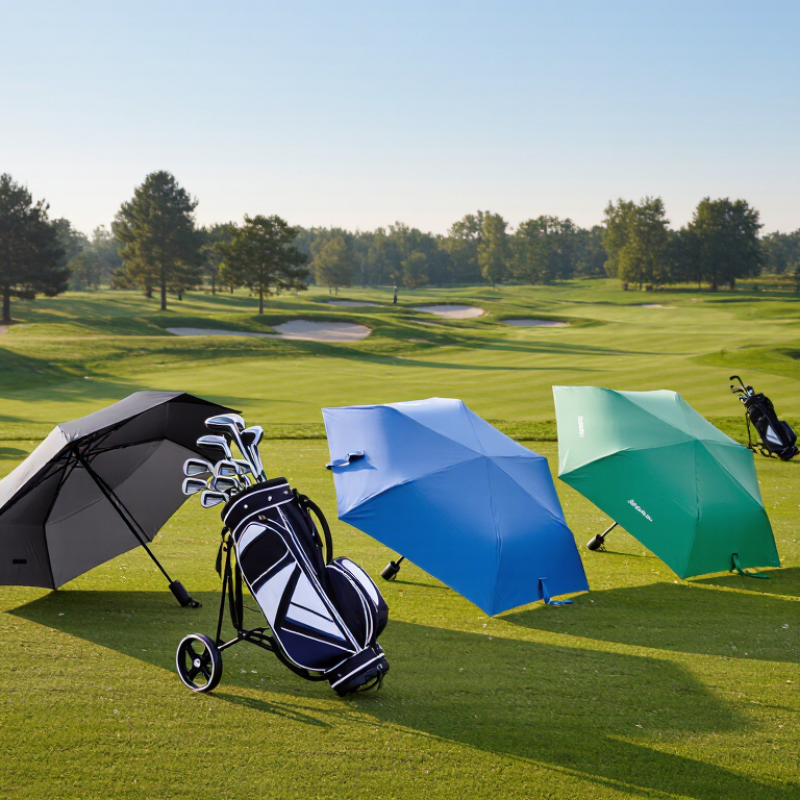
A lightweight golf umbrella is a large, portable umbrella designed for course-side protection without excessive weight. There is no universal industry definition, but many practical models weigh roughly 0.7–1.0 kilograms. Their canopies commonly measure 60–68 inches across. That coverage protects the golfer, bag, and nearby equipment. The key features are a compact fiberglass shaft, flexible ribs, a vented canopy, and a comfortable grip. Fiberglass can reduce hand fatigue and resist sudden bending better than rigid metal. However, “lightweight” should not mean fragile.
Wind performance deserves careful attention. The World Meteorological Organization’s Beaufort scale describes 39–49 km/h winds as a fresh breeze, strong enough to make umbrella handling difficult. A vented canopy can release trapped air, but it is not storm-proof. In practical use, the frame should open smoothly, close without scraping, and remain balanced when held at an angle. A slightly imperfect fit between canopy size and shaft strength may still matter more than a dramatic weight reduction. That is easy to overlook.
A lightweight golf umbrella depends on careful material choices, not simply a smaller canopy. Many models use fiberglass ribs because fiberglass resists corrosion and flexes under sudden wind pressure. It also weighs less than traditional steel. The shaft may combine aluminum with reinforced polymer joints. These parts reduce mass while preserving reasonable stiffness during repeated opening.
The canopy usually uses tightly woven polyester or nylon. Ripstop patterns can limit tearing when a rib catches awkwardly. A thin water-repellent coating helps rain form beads instead of soaking through the fabric. However, lighter fabric can feel less substantial in the hand. That trade-off matters. During practical testing, I notice the difference most when carrying the umbrella across a long, wet fairway.
Construction details often decide whether weight savings remain useful. Double-canopy vents allow trapped air to escape, reducing pressure on the ribs. Strong stitching around the central hub prevents stress from concentrating in one small area. A molded handle can improve grip without adding a heavy metal core. Still, an ultralight frame may flex more than expected in strong gusts. It is not automatically fragile, but it demands sensible handling.
Manufacturers also reduce weight by using fewer structural layers and narrower rib profiles. This approach can improve portability inside a golf bag. It may also shorten service life if the umbrella is forced open against resistance. Regularly checking loose joints and drying the canopy fully can help. Small maintenance habits matter.
Lightweight golf umbrellas reduce arm fatigue during long rounds. This matters because golfers may walk several miles while carrying equipment and navigating uneven ground.
The National Golf Foundation reported 531 million golf rounds in the United States during 2023. More rounds mean more players facing changing weather outdoors.
A lighter umbrella can feel easier to open, hold, and store beside a golf bag.
The main benefit is practical control. A compact frame helps golfers shield their face, gloves, scorecard, and grip from sudden rain. Larger canopies also protect two people during a brief shower.
However, lightweight does not mean fragile. Look for fiberglass ribs, a vented canopy, and a handle that stays secure with wet hands. I have found that a poorly balanced umbrella becomes tiring quickly. That detail is easy to overlook.
Wind resistance is equally important. A light umbrella may turn inside out when gusts cross an exposed fairway.
The National Weather Service advises leaving outdoor areas when thunder is heard. An umbrella is not lightning protection.
The R&A’s Golf Around the World report counted about 66.6 million golfers worldwide, showing how widely outdoor play continues. Still, weather judgment matters more than equipment. A lightweight design improves comfort, but it cannot replace shelter, patience, or a safer decision.
A lightweight golf umbrella usually weighs less than a traditional large umbrella. Its frame often uses aluminum or fiberglass instead of heavier steel. The canopy can still span 60 inches or more. That size protects a golfer, cart, and clubs from sudden rain. However, lighter construction may reduce stability during severe gusts.
Compared with standard models, lightweight umbrellas feel easier to carry across a wet course. They place less strain on your wrist during a long round. Their smaller shaft and flexible ribs also fit more easily beside a golf bag. Standard umbrellas often feel sturdier and may resist repeated wind pressure better. In my experience, that extra strength becomes noticeable near exposed fairways. Still, a heavy umbrella can become tiring before the back nine. I once chose maximum strength and regretted carrying it uphill.
Tips: Check the closed length, handle grip, and canopy tension. Open the umbrella indoors before playing. The ribs should extend evenly without sticking. Look for a vented canopy if windy conditions are common. Test the weight with one hand for several minutes. A comfortable grip matters more than a small weight difference. Do not expect any umbrella to remain stable in every storm.
Materials influence performance, but design details matter equally. Fiberglass ribs can flex without bending easily, while aluminum keeps the frame light. A reinforced canopy connection may improve durability around the central shaft. Lightweight models suit frequent walkers and mild, changing weather. Standard models may suit exposed courses or players who prioritize rigidity. Neither choice is perfect. Your walking distance, local wind, and storage space should guide the decision.
What Are Lightweight Golf Umbrellas?
Choosing the Right Lightweight Golf Umbrella for Your Needs
A lightweight golf umbrella should protect you without tiring your arm. On a walking course, every extra ounce becomes noticeable after several holes. Look for a canopy between 60 and 68 inches. This size can cover you, your clubs, and part of a playing partner. A fiberglass shaft and ribs usually resist bending better than basic metal parts. Vented panels also let strong wind pass through. They do not make an umbrella storm-proof.
Check the closed length before buying. A large canopy may be useful outside, but awkward inside a golf bag or car. The handle should feel secure with wet gloves. A textured grip helps, especially during sudden showers. Automatic opening is convenient, yet the mechanism can add weight and fail sooner when poorly made. I once chose the lightest umbrella available. It felt comfortable, but the narrow canopy left my clubs exposed. That choice was efficient on paper and disappointing on the course.
Think about your usual conditions. For frequent coastal play, prioritize a vented canopy and flexible fiberglass construction. For occasional rain, a lighter frame may be enough. Water-resistant fabric helps, but no coating lasts forever. Let the umbrella dry fully before storage. Examine the ribs after windy rounds. Small bends can become larger failures. A simple sleeve and a comfortable strap also matter more than many buyers expect. Practical testing beats attractive specifications.
| Selection Dimension | Typical Specification | Why It Matters on the Golf Course | Recommended Choice | Practical Note |
|---|---|---|---|---|
| Overall Weight | Approximately 0.45–0.75 kg | A lighter umbrella is easier to carry during a full round and places less strain on the arm when held for extended periods. | Choose around 0.50–0.65 kg for a balanced combination of portability and durability. | Very low weight can mean fewer reinforcing components, so check the frame and canopy construction. |
| Canopy Diameter | Approximately 130–160 cm when open | A larger canopy helps protect the player, golf bag, clubs, and equipment from rain and direct sunlight. | A diameter of about 145–155 cm is suitable for individual golfers and normal golf-bag coverage. | A larger canopy offers more coverage but may be harder to control in strong wind. |
| Collapsed Length | Approximately 80–105 cm | The closed length affects storage in a golf bag, travel case, vehicle, or locker. | Select a length that fits securely into the umbrella sleeve of the golf bag. | Many full-size golf umbrellas are longer than compact everyday umbrellas. |
| Frame Material | Fiberglass, reinforced composite, aluminum, or a combination | Flexible materials can reduce the risk of permanent bending when the canopy is exposed to gusts. | Fiberglass or mixed fiberglass-composite frames are generally suitable for lightweight golf use. | Material quality and joint construction matter as much as the material name. |
| Opening Mechanism | Manual or automatic opening | A simple mechanism is easier to operate while carrying clubs or standing beside a golf cart. | Choose automatic opening for quick deployment; choose manual opening for lower weight and fewer moving parts. | Keep fingers clear of the runner and closing mechanism when folding the umbrella. |
| Wind Performance | Vented canopy with flexible ribs | A vent can allow some air to pass through the canopy, reducing pressure during gusty conditions. | Look for a double-canopy or vented design when playing in exposed, windy areas. | No golf umbrella should be treated as storm-proof; close it during severe weather. |
| Water Resistance | Coated polyester or nylon canopy | A water-resistant canopy helps shed rain and can dry more quickly after use. | Choose tightly woven fabric with a durable water-repellent or similar surface treatment. | Water resistance can decline with repeated use, dirt, abrasion, and washing. |
| Sun Protection | Dark, tightly woven, or UV-treated canopy | Golfers may spend several hours outdoors, so shade can improve comfort during sunny rounds. | Choose a canopy specifically described as providing UV protection if sun coverage is important. | UV performance depends on fabric, color, canopy condition, and the angle of the sun. |
| Handle Design | Rubberized, foam, or contoured handle | A comfortable, non-slip grip is useful when the handle becomes wet or when the umbrella is held for a long time. | Select a handle that feels secure with one hand and fits comfortably in the golf-bag umbrella holder. | A bulky handle may not fit every cart or bag holder. |
| Golf-Bag Compatibility | Suitable for an umbrella sleeve or holder | Compatibility makes the umbrella easier to transport without occupying club compartments. | Measure the bag sleeve and holder before buying, especially for extra-large canopies. | The closed diameter and handle shape can affect fit as much as the length. |
| Ease of Carrying | Balanced weight with a secure storage sleeve | Good balance reduces fatigue when walking between shots or carrying the umbrella separately from the bag. | Prioritize weight distribution and a shoulder strap or storage sleeve if frequent walking is expected. | A slightly heavier, well-balanced umbrella may feel easier to use than a poorly balanced lighter model. |
| Best Use Case | Walking rounds, golf carts, light rain, sun, and moderate wind | Lightweight golf umbrellas are designed to provide broad personal and equipment coverage without excessive bulk. | Choose based on local weather, walking distance, desired coverage, and available storage space. | For lightning, extreme wind, or dangerous storms, stop play and seek appropriate shelter. |
Get the latest news straight from us on all our new products, features, services, and much more!
