


For cafés, caterers, and beverage brands, a cup is more than a container. Its paper stock affects forming, printing, insulation, and the customer’s first impression. A dependable Cup Paper Sheet must run smoothly on converting equipment and hold its shape around hot or cold drinks. Small variations matter. A rough rim, uneven coating, or weak seam can slow a production line and waste material.
The market is also drawing attention. Grand View Research estimated the global paper cups market at USD 10.31 billion in 2023 and projected a 4.4% compound annual growth rate from 2024 to 2030. That forecast suggests continued demand, not a guarantee for every supplier or region. Buyers still need to compare stiffness, grammage, coating performance, print quality, and food-contact documentation against their own specifications. The U.S. Environmental Protection Agency’s materials-management reporting also shows why recycling claims need care: broad paper and paperboard recovery figures do not automatically describe coated cup stock, which can require specialized collection and processing. Details matter.
Choosing well means balancing cost with reliable converting performance and clear material information. Ask suppliers for technical data sheets, sample runs, and evidence supporting environmental claims. Then test sheets on your actual equipment. A sample may look perfect on a desk and behave differently at line speed. That is an inconvenient truth, but a useful one.
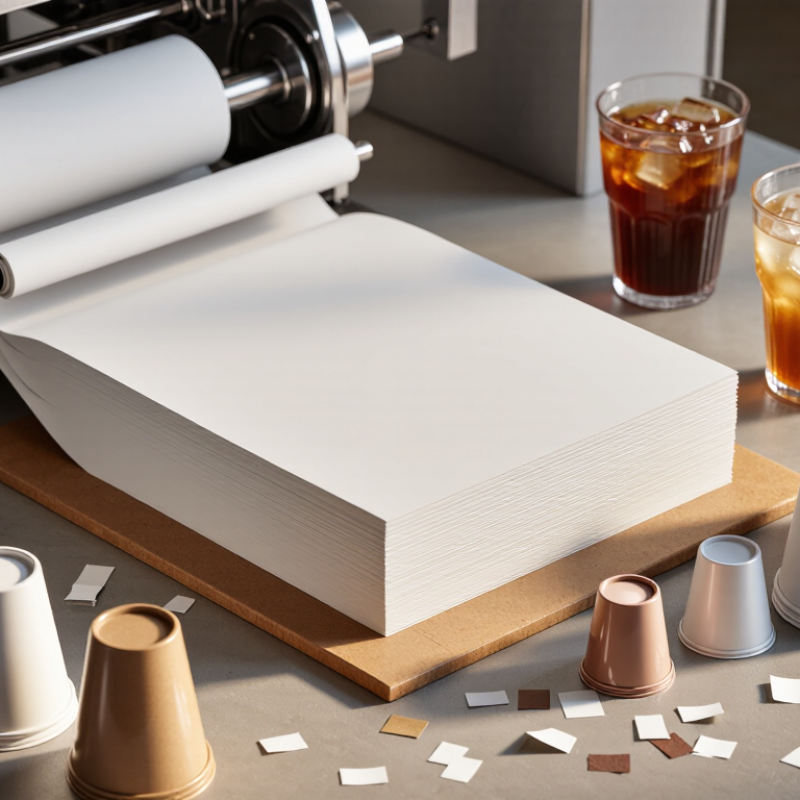
Cup paper sheets are flat paperboard blanks used to form the walls and bottoms of disposable cups. They arrive in stacks, then are printed, die-cut, and shaped into cylinders or discs. The base material is made by pressing and drying wood-pulp fibers into a uniform sheet. Its thickness, stiffness, and moisture level affect how cleanly it feeds through converting equipment. Small details matter. A sheet that curls or absorbs liquid unevenly can cause sealing problems or slow production.
Many sheets include a thin barrier layer, such as polyethylene or a water-based coating, to resist leaks. The right option depends on the drink, filling temperature, and intended use. Manufacturers also check print adhesion, cut edges, and seam performance; the sheet must handle forming without cracking. There is no single “best” construction. It can be easy to overlook how local collection systems treat coated paper products. The American Forest & Paper Association reported a 68% recycling rate for paper and paperboard in the United States in 2022, but that figure covers many products, not cup sheets specifically. Recovery of a finished cup depends on its materials and local recycling facilities.
Cup paper sheets are paperboard sheets prepared for conversion into paper cups. They are made by forming and drying paperboard, adding a liquid-resistant barrier such as polyethylene or a suitable alternative, then printing and cutting the material. The chart shows process order only—not production time or output.
Cup performance starts with the sheet itself. Fiber quality and sheet weight affect stiffness, forming, and how well a cup holds its shape. A sheet that is too light may soften under a hot drink; one that is too heavy can be harder to form and may add unnecessary material. Feel the sheet, but also test it on your forming equipment. A promising sample can behave differently at production speed.
The coating controls how the cup handles liquid and heat. A thin barrier can resist seepage, while the wrong coating or uneven coverage may leave weak spots near seams. Hot drinks need a sheet and coating combination that tolerates heat without softening too quickly. Cold drinks bring another concern: condensation can dampen the outer surface. Small details matter. Compare sheets using the drinks you actually sell, and check for leaks after filling and holding them. Ask suppliers what barrier material is used, then verify how it performs in your process. Recyclability can depend on local collection and processing, so avoid assuming every coated cup follows the same route. I would not choose by coating claims alone; the finished cup is the real test.
Cup paper sheets can help packaging businesses respond to changing order volumes. Because they arrive flat, they usually take less storage space than finished cups. That can free shelving for lids, sleeves, or other fast-moving supplies. A smaller footprint matters. Sheets can also support flexible printing and sizing for businesses serving several cafés or event clients. With suitable coating and paper weight, they can be converted into cups for hot or cold drinks. Suitability depends on the converting line and the intended use.
For manufacturers, ordering sheets in planned batches may simplify inventory and reduce the need to store many finished-cup designs. Custom artwork can distinguish seasonal menus or private-label orders without changing the entire production setup. Consistent dimensions and reliable feeding help limit jams and uneven seams. Those details affect labor, rejected cups, and delivery timing, not just appearance. Request technical specifications and test samples on your own equipment before placing a large order.
There is a trade-off. Flat stock saves storage space, but it requires converting equipment, trained operators, and quality checks. A low sheet price may not mean a lower finished-cup cost if trimming waste or downtime increases. It is easy to focus on material cost and overlook setup time. Track sheet usage, rejected cups, and changeover time across several production runs; the results may challenge initial assumptions.
| Business Dimension | Benefit of Cup Paper Sheets | Practical Business Value | Important Consideration |
|---|---|---|---|
| Printing and branding | Flat sheets can be printed before they are converted into cup blanks. | Provides space for logos, product information, instructions, and promotional designs. | Confirm that the ink and printing process are suitable for the intended food-contact application. |
| Material specification | Paper weight, barrier coating, and sheet dimensions can be selected to suit the cup design and use. | Helps align material choices with requirements such as cup strength, beverage type, and converting equipment. | Performance depends on the complete cup construction, including the paperboard, coating, seams, and forming process. |
| Converting and production | Sheets can be supplied for cutting and forming into cup blanks by suitable converting equipment. | Can fit production workflows that process printed or unprinted sheet material. | Check sheet size, grain direction, flatness, and machine compatibility before placing a production order. |
| Storage and handling | Unformed sheets can be stored flat and take up less space than finished cups of the same intended capacity. | May help make warehouse storage and material handling more efficient. | Protect sheets from moisture, dirt, and damage to preserve their condition before converting. |
| Inventory planning | Sheet specifications can be matched to planned cup sizes and production runs. | Supports organized purchasing and production planning across different cup designs. | Too many sheet variants can increase inventory complexity; standardize specifications where practical. |
| Quality control | Defined sheet dimensions and material specifications provide measurable incoming-inspection criteria. | Helps businesses check consistency before sheets enter the converting process. | Set acceptance criteria for dimensions, print quality, coating, and visible defects with the supplier. |
| Food-contact compliance | Paper-based cup materials can be specified for food-contact use when the relevant materials and finished product meet applicable requirements. | Provides a basis for selecting packaging materials for beverage service. | Verify applicable local regulations and request supporting compliance documentation for the intended use. |
| Environmental considerations | Paper is a fiber-based material, and some cup papers may use coatings or other barriers to resist liquid. | Allows businesses to assess material composition as part of packaging decisions. | Recyclability and disposal options depend on the coating, local collection systems, and available recycling facilities; avoid assuming all cup papers are recyclable everywhere. |
| Cost management | Businesses can compare material specifications, order quantities, printing, and converting requirements together. | Supports a fuller evaluation of packaging costs across materials and production steps. | Actual costs vary by paper grade, coating, print requirements, order volume, transport, and production setup. |
Cup paper sheets offer a practical balance of printability, stiffness, and lightweight handling. They can be cut and formed into cups, while flat sheets stack efficiently before conversion. Compared with rigid plastic or foam packaging, paper-based stock often provides a more familiar, tactile presentation. A useful middle ground. Still, performance depends on the cup’s barrier coating, thickness, and intended use. A warm drink can expose weak seams quickly.
Recycling figures favor paper packaging in some regions, but they need context. The U.S. Environmental Protection Agency’s 2018 materials report estimated that 80.9% of paper and paperboard containers and packaging were recycled, compared with 13.6% of plastic containers and packaging. These are broad packaging categories, not cup-specific rates. The European Paper Recycling Council reported a 79.3% paper recycling rate in Europe for 2023. Local collection rules still matter.
Compared with aluminum, cup paper sheets are easier to print and can feel less cold in the hand, but they may need a barrier layer to resist leaks. That layer can complicate recycling, especially where facilities do not accept coated cups. Reusable containers avoid single-use waste when customers actually return and wash them. That assumption is not always true. Before choosing a material, businesses should test filled cups for leakage, heat retention, and disposal options in their service area.
Choosing cup paper sheets starts with the drink and the forming line. A hot latte needs stronger stiffness and reliable heat resistance than a chilled drink. Compare basis weight, thickness, and moisture performance using the same cup size and forming settings. Ask suppliers for food-contact documentation and batch specifications, then check that sheets feed smoothly without curling or tearing. Test before scaling. A few pilot runs can reveal rim leaks or weak side seams that a sample sheet will not show.
Barrier design deserves close attention. Polyethylene, aqueous, and other coatings behave differently during forming and disposal; confirm compatibility with your sealing equipment and local waste facilities. A recyclable claim is not enough on its own. AF&PA reported a 68% U.S. paper recycling rate for 2022, but that figure covers paper overall, not every coated cup or paper sheet. Ask what recovery routes actually accept the finished cup. Also compare sheet consistency, print quality, minimum order size, and lead time—not just price per ton. A cheaper grade may increase rejects, and that trade-off is easy to underestimate. Keep test records for leakage, stiffness, and production waste, then review them with the supplier before changing specifications.
Get the latest news straight from us on all our new products, features, services, and much more!
